

Key Takeaways
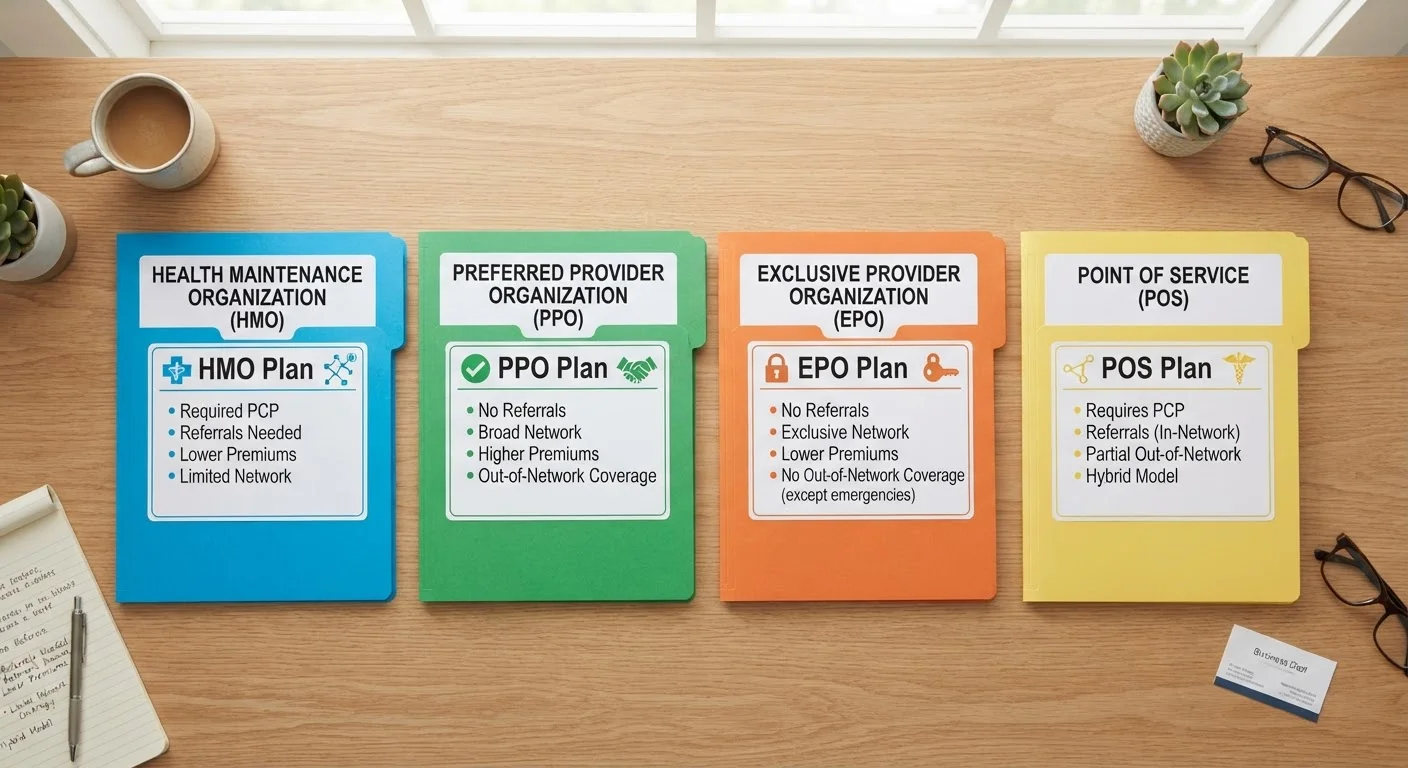
- HMOs require a primary care physician and referrals but typically carry lower monthly premiums.
- PPOs offer the most provider flexibility but usually come with higher premiums and out-of-pocket costs.
- EPOs combine lower premiums with a strict in-network-only requirement - no out-of-network coverage except emergencies.
- HDHPs pair high deductibles with eligibility for a Health Savings Account (HSA), rewarding those who rarely need care.
- No single plan type is universally superior - the right fit depends on your health needs, budget, and preferred doctors.
Our Verdict
Each plan type reflects a different trade-off between cost, flexibility, and administrative simplicity. PPOs suit people who want maximum provider choice and can absorb higher premiums. HMOs and EPOs work well for those who want predictable costs and are comfortable with network restrictions. HDHPs make the most sense for generally healthy individuals who can build an HSA as a financial buffer. This article is for general informational purposes and does not constitute personalized insurance or financial advice - consult a licensed insurance professional to evaluate your specific situation.
| Best for | Recommended |
|---|---|
| People who value provider flexibility and see specialists often | PPO |
| Those who want lower premiums and are comfortable using a primary care gatekeeper | HMO |
| Readers seeking moderate premiums with strict network discipline | EPO |
| Generally healthy individuals who want to build tax-advantaged savings | HDHP with HSA |
Why the Plan Type Matters Before You Look at Price
When comparing health coverage options, most people jump straight to the monthly premium. But the plan type - HMO, PPO, EPO, or HDHP - determines the rules you'll live by all year: which doctors you can see, whether you need permission to visit a specialist, and how costs stack up when you actually use care.
Before evaluating any plan's numbers, it helps to understand what each acronym actually means. To get comfortable with the underlying cost terms - deductibles, copays, coinsurance - see our plain-language breakdown of insurance cost terms first.
| HMO | PPO | EPO | HDHP | |
|---|---|---|---|---|
| Requires PCP | Yes | No | No | Varies by plan |
| Referrals needed for specialists | Yes | No | No | Usually no |
| Out-of-network coverage | Emergency only | Yes, at higher cost | Emergency only | Depends on plan |
| Typical premium level | Lower | Higher | Moderate | Lower |
| Deductible level | Moderate | Moderate to high | Moderate | High (IRS-defined) |
| HSA eligible | No | No | No | Yes |
| Best for | Predictable costs, local care | Provider flexibility | No-referral simplicity | Healthy, savings-focused |
HMO: Coordinated Care at a Lower Cost
A Health Maintenance Organization (HMO) ties your care to a defined network of doctors and hospitals. You select a primary care physician (PCP) who acts as your main point of contact and issues referrals when you need to see a specialist. Without a referral, specialist visits typically aren't covered.
The trade-off: HMOs generally carry the lowest monthly premiums of the four plan types, and cost-sharing at the point of care is usually predictable. The limitation is geographic - if you travel frequently or live in a rural area with a thin network, accessing in-network care can be inconvenient. Emergency care is covered regardless of network, but routine out-of-network visits are not.
Check Your Doctor's Network Before Enrolling
Before choosing any plan - especially an HMO or EPO - confirm that your preferred primary care doctor and any specialists you see regularly are listed as in-network participants. Network directories can change between plan years, so verify directly with both the insurer and the provider's office. Switching mid-year to access an out-of-network provider can be costly or, in some plan types, not covered at all.
PPO: Maximum Flexibility, Higher Price Tag
A Preferred Provider Organization (PPO) lets you see any licensed provider - in-network or out-of-network - without a referral. In-network visits cost less; out-of-network visits are still covered but at a higher cost-sharing rate. There is no PCP requirement.
PPOs suit people who manage complex or ongoing conditions, see multiple specialists, or simply want the freedom to choose their providers without administrative steps. That flexibility comes at a cost: PPO premiums are typically the highest among common plan types, and out-of-pocket maximums can be substantial. Understanding how your plan structures those limits is important - our article on how a policy is structured explains where to find those details.
EPO: Network-Only Coverage With No Referral Hassle
An Exclusive Provider Organization (EPO) occupies the middle ground. Like a PPO, EPOs do not require a PCP or referrals - you can self-refer to any in-network specialist. Like an HMO, EPOs provide no coverage for out-of-network care outside of a genuine emergency.
EPO premiums are generally lower than PPOs but higher than many HMOs, reflecting that partial flexibility. If you're comfortable with network restrictions and don't need out-of-network access, an EPO can deliver meaningful premium savings without the referral bureaucracy. Verify the plan's network carefully before enrolling - a narrow EPO network in your area could limit your options significantly.
49%
Workers enrolled in HDHP/HRA plans
According to KFF's 2023 Employer Health Benefits Survey, nearly half of covered workers were enrolled in an HDHP or HRA-based plan.
47%
Workers enrolled in PPO plans
KFF's 2023 survey found PPOs remain the second most common plan type among employer-sponsored coverage nationwide.
HDHP: High Deductibles, HSA Access, and Long-Term Savings
A High-Deductible Health Plan (HDHP) is defined by IRS thresholds that change periodically - generally a minimum deductible and an out-of-pocket maximum set higher than standard plans. The defining benefit is eligibility to contribute to a Health Savings Account (HSA), a tax-advantaged account that lets you set aside pre-tax dollars for qualified medical expenses.
HDHPs make most sense for people who are generally healthy, use relatively little healthcare in a typical year, and can absorb a large expense if something unexpected occurs. Contributions to an HSA are tax-deductible, grow tax-free, and roll over year to year - unlike a Flexible Spending Account (FSA). For people who consistently underspend their deductible, the premium savings plus HSA growth can outperform a lower-deductible plan over time. However, if you have frequent care needs, the high deductible can result in significantly more out-of-pocket spending before insurance kicks in.
Before enrolling, review exactly what your plan covers and what it doesn't - HDHP plans still cover preventive services at no cost under federal law, but the specifics vary. And once you're enrolled, knowing how to read your Explanation of Benefits (EOB) will help you track costs against your deductible accurately.
When comparing plans side by side, it pays to ask the right questions before agreeing to any policy - network breadth, prior authorization requirements, and drug formulary placement all affect real-world costs in ways the premium alone won't reveal.
This article provides general educational information about health insurance plan types and is not personalized insurance, financial, or medical advice. Coverage rules, costs, and network structures vary by insurer and plan. Consult a licensed insurance professional for guidance specific to your situation.