

Key Takeaways
- Homemade enrichment activities can strengthen the bond between owners and their pets.
- DIY options are often low-cost but require careful attention to material safety.
- Not all household items are safe - some can pose choking or toxicity hazards.
- DIY enrichment works best as a complement to, not a replacement for, species-appropriate activities.
- Supervision and knowing your individual pet's behavior are essential for safe DIY play.
Significantly lower cost than commercial enrichment products
Most DIY activities use items already found at home - cardboard, paper bags, muffin tins - making them essentially free. This can make enrichment more consistent, since owners aren't constrained by budget.
Fully customizable to your pet's preferences
Owners can adjust difficulty, size, and material to suit their specific animal's skill level and interests - something mass-produced products cannot easily offer.
Encourages frequent novelty without added expense
Because materials are cheap and disposable, owners can rotate activities more often, which helps prevent habituation - a common reason pets lose interest in enrichment.
Strengthens the human-pet bond through active involvement
Creating and presenting enrichment activities involves the owner's scent and attention, both of which can have calming, trust-building effects on many companion animals.
Reduces household waste through creative reuse
Repurposing cardboard, paper, and food containers gives materials a second life before recycling, which many environmentally conscious pet owners appreciate.
Material safety risks are easy to overlook
Everyday items like rubber bands, dyed paper, certain plastics, and adhesives can be toxic or hazardous to specific species. Owners must research every component carefully before use.
Homemade items may not be durable or hygienic
Cardboard and paper degrade quickly with use and are difficult to sanitize, which can become a health concern - especially when food is involved.
Difficulty level is hard to calibrate consistently
Without design expertise, DIY puzzles may be too easy (offering no cognitive challenge) or too hard (leading to frustration and stress). Finding the right level requires trial and observation.
Risk of ingestion or injury without supervision
Pieces of cardboard, string, or paper can be swallowed, and some homemade structures may collapse unexpectedly. Unsupervised use of untested DIY items carries real injury risk.
May not meet species-specific behavioral needs
Some animals require enrichment that mirrors very specific natural behaviors - behaviors that may be difficult to address without guidance from a veterinarian or certified animal behaviorist.
Our Verdict
DIY enrichment is a genuinely valuable tool in any pet owner's toolkit - it encourages creativity, reduces costs, and can meaningfully deepen the human-animal bond. However, it carries real risks when materials are chosen carelessly or activities aren't matched to a pet's species, size, and temperament. Used thoughtfully and safely, homemade activities are a worthwhile complement to commercially designed enrichment.
Best for engaged, hands-on pet owners who are willing to research material safety and supervise their pets during DIY activities.
What DIY Enrichment Actually Means
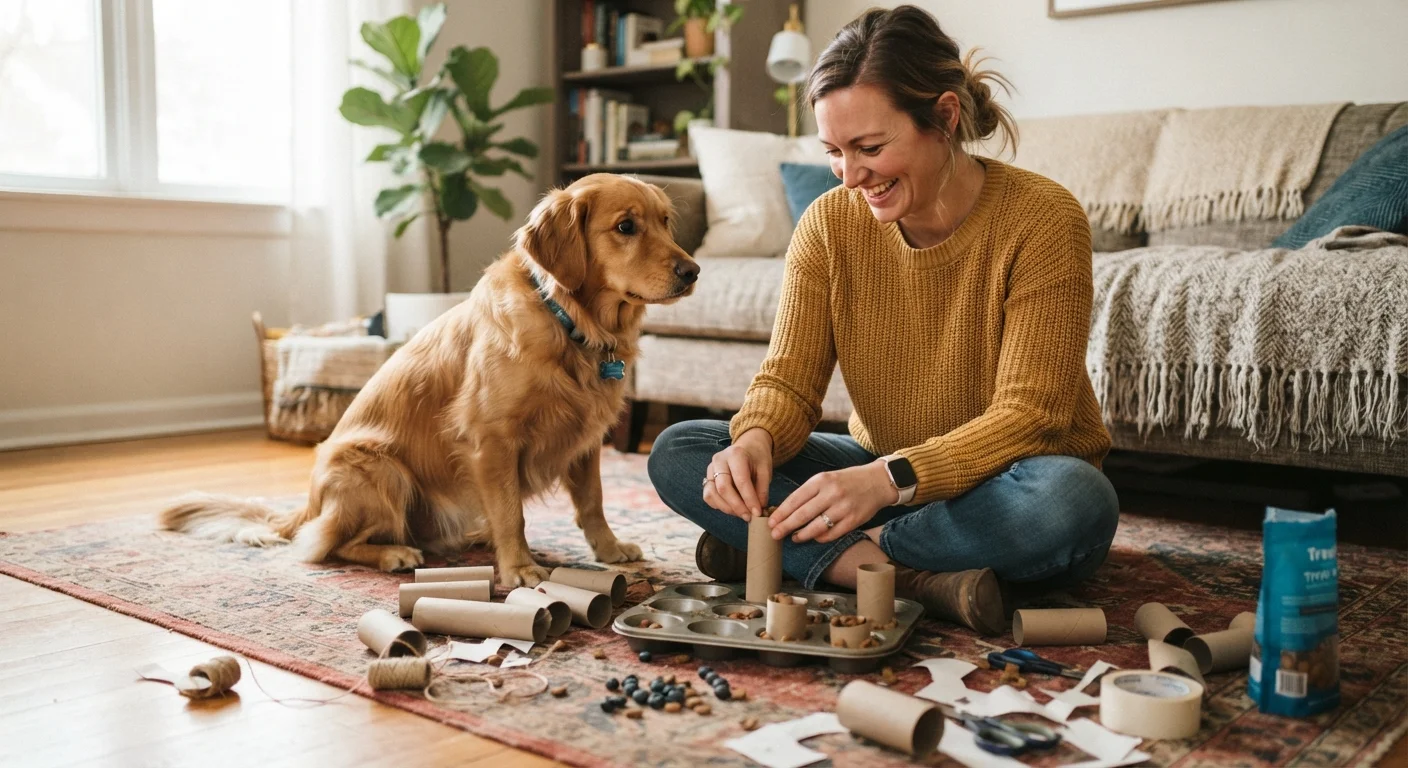
DIY enrichment refers to any activity, puzzle, or sensory experience that a pet owner creates from materials they already have at home - think cardboard boxes turned into foraging stations, muffin tins loaded with treats, or crinkled paper used as nesting material for small animals. The appeal is obvious: it's accessible, customizable, and doesn't require a trip to a specialty store.
But enrichment isn't just about keeping a pet busy. Done well, it supports mental stimulation, natural behavioral expression, and emotional wellbeing. Done poorly, it can frustrate, bore, or even endanger your pet. Understanding that distinction is the foundation of any honest conversation about homemade activities. For a deeper look at how enrichment needs vary by animal, see species-specific enrichment strategies.
The Real Advantages of Going Homemade
There are several compelling reasons why homemade enrichment has become so popular among dedicated pet owners.
Significantly lower cost than commercial enrichment products
Most DIY activities use items already found at home - cardboard, paper bags, muffin tins - making them essentially free. This can make enrichment more consistent, since owners aren't constrained by budget.
Fully customizable to your pet's preferences
Owners can adjust difficulty, size, and material to suit their specific animal's skill level and interests - something mass-produced products cannot easily offer.
Encourages frequent novelty without added expense
Because materials are cheap and disposable, owners can rotate activities more often, which helps prevent habituation - a common reason pets lose interest in enrichment.
Strengthens the human-pet bond through active involvement
Creating and presenting enrichment activities involves the owner's scent and attention, both of which can have calming, trust-building effects on many companion animals.
Reduces household waste through creative reuse
Repurposing cardboard, paper, and food containers gives materials a second life before recycling, which many environmentally conscious pet owners appreciate.
~60%
Pet owners who report making homemade enrichment items
Survey data from the American Pet Products Association suggests a majority of engaged pet owners incorporate some form of DIY enrichment into their pet care routines.
$0-$5
Typical cost of a homemade enrichment activity
Most DIY enrichment activities use repurposed household materials, making them far less expensive than commercially produced puzzle feeders or interactive toys.
Beyond cost savings, DIY enrichment gives owners the flexibility to tailor difficulty levels, switch out materials frequently to maintain novelty, and respond directly to what their specific pet enjoys. A dog who ignores a store-bought puzzle may be captivated by a simple egg carton filled with kibble - because the owner knows that dog. That personalization is difficult to replicate with mass-produced products.
There's also a meaningful bonding dimension. The act of creating something for your pet - and then watching them engage with it - can deepen the sense of partnership between owner and animal. This is supported by animal behavior research suggesting that positive, low-stress interactions that involve the owner's scent and presence can reduce anxiety in companion animals.
The Honest Drawbacks You Should Know
No approach to enrichment is without trade-offs, and DIY is no exception.
Material safety risks are easy to overlook
Everyday items like rubber bands, dyed paper, certain plastics, and adhesives can be toxic or hazardous to specific species. Owners must research every component carefully before use.
Homemade items may not be durable or hygienic
Cardboard and paper degrade quickly with use and are difficult to sanitize, which can become a health concern - especially when food is involved.
Difficulty level is hard to calibrate consistently
Without design expertise, DIY puzzles may be too easy (offering no cognitive challenge) or too hard (leading to frustration and stress). Finding the right level requires trial and observation.
Risk of ingestion or injury without supervision
Pieces of cardboard, string, or paper can be swallowed, and some homemade structures may collapse unexpectedly. Unsupervised use of untested DIY items carries real injury risk.
May not meet species-specific behavioral needs
Some animals require enrichment that mirrors very specific natural behaviors - behaviors that may be difficult to address without guidance from a veterinarian or certified animal behaviorist.
One of the most underappreciated risks is material safety. Common household items - rubber bands, twist ties, certain adhesives, dyed papers, or plastic bags - can be toxic or pose choking hazards. Birds, in particular, are sensitive to many fumes and materials that appear harmless. Small animals like rabbits or guinea pigs may ingest cardboard dyes or glues. Always verify that every component of a homemade activity is non-toxic and appropriately sized for your pet before use.
There's also the issue of durability and hygiene. Homemade items may degrade quickly and become difficult to clean, creating sanitation concerns - especially for enrichment that involves food. See our article on enrichment pitfalls that can frustrate or stress your pet for specific patterns to watch out for.
When to Involve Your Veterinarian
If your pet shows signs of stress, disinterest, or destructive behavior during enrichment, it may signal that the activity isn't well-matched to their needs - or that an underlying health or behavioral issue needs attention. A veterinarian or certified animal behaviorist can help you identify enrichment approaches suited to your pet's age, health status, and temperament. This is especially important for exotic species, senior animals, or pets with a history of anxiety.
How to Get the Balance Right
The most effective enrichment strategies typically blend both DIY and commercially designed options. Homemade activities work best when they are supervised, especially initially, and when they're matched to the animal's natural behaviors - foraging for dogs and rodents, stalking and pouncing for cats, shredding and problem-solving for parrots.
Before building anything, ask: Is every material non-toxic? Is the activity sized appropriately for my pet? Could any component be swallowed or cause injury? If you're unsure, consult your veterinarian before introducing the activity. This is particularly important for exotic species whose sensitivities may not be widely documented in general pet care guides.
It's also worth considering how DIY fits into your broader enrichment plan. Balancing indoor and outdoor enrichment is one useful framework, as is understanding active versus passive enrichment options based on your daily schedule. And if you've been hesitant to try homemade options based on assumptions about cost or complexity, our coverage of common enrichment myths may offer a useful reality check.
This article is for general informational purposes only and does not constitute veterinary advice. Always consult a licensed veterinarian regarding your individual pet's health, behavior, and enrichment needs.