

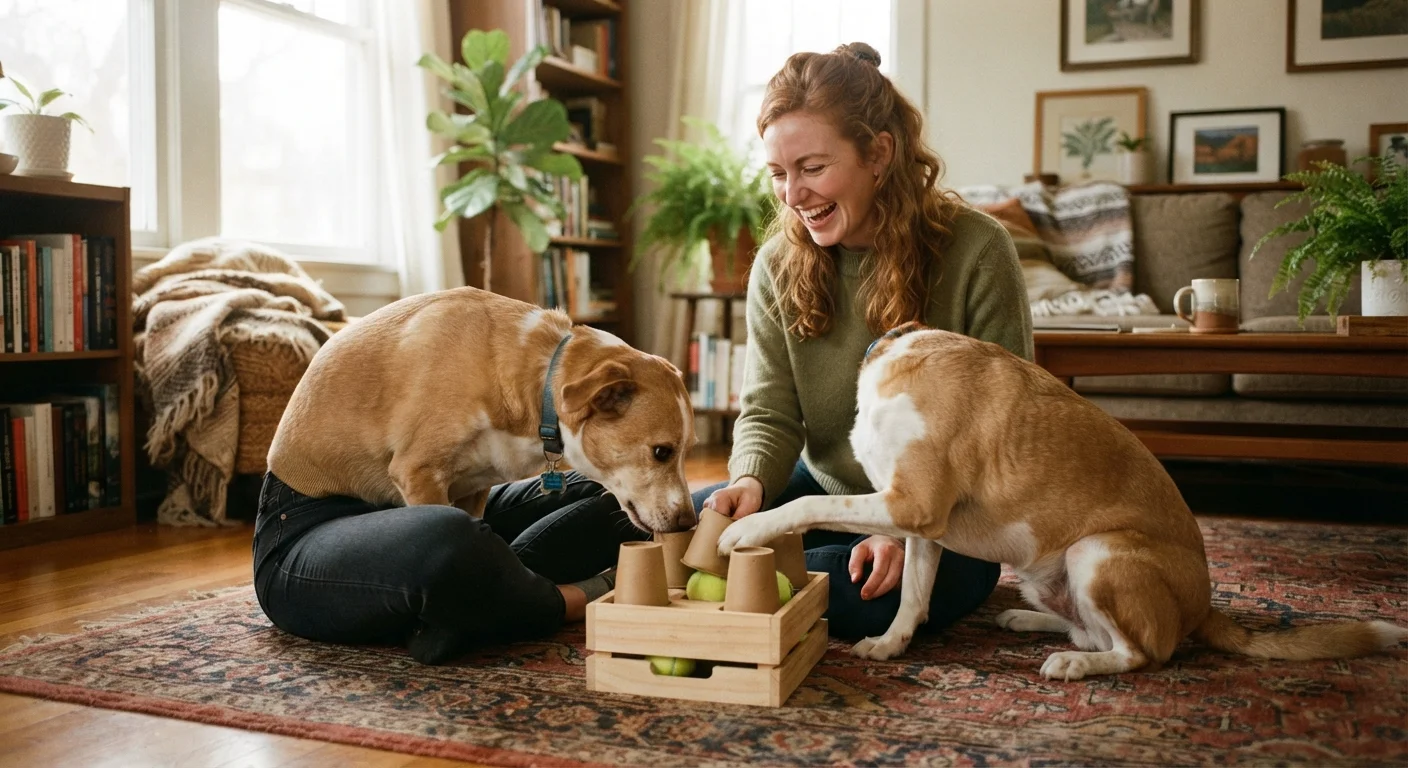
Key Takeaways
- Enrichment means giving your pet meaningful mental and physical stimulation suited to their natural instincts.
- Even five minutes of intentional activity per day can noticeably improve a pet's wellbeing.
- You don't need expensive gear - everyday household items work well for beginners.
- Watching how your pet reacts helps you refine activities and avoid unintentional stress.
- Building enrichment into your daily routine strengthens the bond between you and your pet.
Start here
What Is Pet Enrichment, Really?
Understand the why
Why Enrichment Matters for Every Pet
Take action
Five Easy Ways to Start Today
Build the habit
How to Build a Simple Enrichment Routine
Fine-tune
Reading Your Pet's Response
What Is Pet Enrichment, Really?
Pet enrichment is the practice of providing animals with activities, environments, and experiences that stimulate their natural behaviors and support their mental and physical wellbeing. The concept comes directly from professional animal care - zoos and sanctuaries have used structured enrichment programs for decades to help captive animals thrive.
For companion animals, the core idea is the same: pets are not passive creatures. Dogs are wired to sniff and problem-solve. Cats are built to stalk, pounce, and explore. Rabbits need to dig and forage. When those instincts go unmet, animals often develop stress-related behaviors that can be mistaken for stubbornness or misbehavior.
Enrichment
Activities, objects, or environmental changes that allow an animal to express natural behaviors and stay mentally engaged.
Foraging
The instinctive behavior of searching for food. Simulating foraging through scatter feeding or food puzzles taps into this drive productively.
Cognitive stimulation
Activities that require an animal to think, problem-solve, or learn - keeping the brain active and helping prevent boredom.
Novelty
Something new or unfamiliar in the pet's environment. Controlled novelty - like a new scent or object - naturally engages curiosity.
Stress behaviors
Repetitive or destructive behaviors (like excessive barking or chewing) that often signal unmet behavioral or mental needs rather than deliberate misbehavior.
Enrichment is not synonymous with expensive toys or elaborate setups. It simply means giving your pet regular, meaningful opportunities to engage with the world in ways that feel natural to them.
Why Enrichment Matters for Every Pet
Research in animal behavior consistently links adequate mental stimulation to better emotional health in companion animals. Pets that lack enrichment may show signs of frustration - repetitive pacing, excessive vocalization, destructive chewing, or withdrawal. These aren't personality flaws; they're signals that a need isn't being met.
Enrichment also supports cognitive health as pets age. Keeping the brain active through varied experiences may help maintain sharpness in older animals, much like mental exercise benefits people. The practical guidance in our Pet Health & Wellness hub goes into more detail about supporting your pet's wellbeing across life stages.
Perhaps most importantly for new owners: enrichment is one of the most accessible ways to deepen your relationship with your pet. Activities that challenge and engage your animal naturally position you as a source of good things - stimulation, variety, and connection.
Start Small and Build Gradually
New enrichment activities should be easy enough that your pet succeeds quickly. Early wins build confidence for both the animal and the owner. Once your pet regularly engages with a simple activity, you can increase complexity step by step.
Five Easy Ways to Start Today
You don't need a plan or special equipment to begin. These five approaches work across a wide range of species and require almost nothing but your attention:
- Sniff walks: Instead of a brisk walk focused on distance, let your dog stop and smell as long as they want. Scent processing is mentally tiring in the best possible way.
- Food scatter feeding: Toss a portion of your pet's meal into grass, a snuffle mat, or across a textured surface. Foraging activates natural search instincts.
- Cardboard box exploration: A plain cardboard box with a treat hidden inside gives curious cats and small animals a low-cost novelty challenge.
- Training micro-sessions: Three to five minutes of teaching a new cue or trick counts as enrichment. Learning is stimulating for both animal and owner.
- Rotate what's available: Instead of buying more, simply rotate which toys or objects your pet has access to. Novelty rekindles interest in items that had become invisible.
If you're worried about common missteps, our guide on enrichment pitfalls covers what to watch for as you experiment.
How to Build a Simple Enrichment Routine
A routine doesn't have to be rigid. Think of it as a loose framework that ensures enrichment happens consistently rather than only when you remember it. A practical starting point is to attach one enrichment activity to something you already do daily - morning feeding, an afternoon break, or an evening wind-down.
Aim for variety across the week rather than the same activity every day. Rotating between physical play, scent work, and problem-solving keeps your pet's experience fresh and exercises different capacities. Balancing indoor and outdoor enrichment is another useful dimension to explore as your confidence grows.
When you're ready to bring your pet into the activity as a shared experience, enrichment activities that double as quality time offers structured ideas that serve both goals at once.
ASPCA Animal Behavior Resources
The ASPCA publishes practical, vet-reviewed guidance on understanding pet behavior and meeting animals' psychological needs - a solid reference for new enrichment practitioners.
Fear Free Happy Homes
A professional-backed initiative offering free resources on reducing pet stress and creating positive experiences at home, with content relevant to enrichment for dogs, cats, and more.
Reading Your Pet's Response
Your pet's behavior is your most reliable feedback tool. After any new activity, observe whether they engage willingly, disengage quickly, or show signs of frustration. Animals who are appropriately challenged typically look relaxed but focused - they stay with the task, return to it, or settle calmly once finished.
If your pet seems overwhelmed, make the task easier. Puzzle feeders that are too difficult become stressful rather than stimulating. If they seem disinterested, the activity may not match their natural preferences - a scent-driven dog may need nose work over a visual puzzle.
Don't Confuse Challenge With Frustration
An enrichment activity that's too difficult can cause stress rather than stimulation. Watch for signs like pawing frantically, giving up immediately, or vocalizing in distress. When in doubt, simplify the task - success at an easier level is always more beneficial than repeated failure.
There's no perfect formula, and that's part of what makes enrichment interesting. Paying close attention to what your individual animal enjoys is itself a form of bonding. It also helps you avoid the misconceptions that trip up many well-meaning owners - common enrichment myths are worth reading through before you invest significant time or money in any single approach.
This article is for general informational purposes only and is not a substitute for advice from a qualified veterinarian or certified animal behavior professional. If your pet displays persistent behavioral concerns, please consult a licensed professional.