

Key Takeaways
- Novelty is a primary driver of mental stimulation - familiar toys lose their power over time.
- Rotating enrichment items every few days can reignite a pet's interest without spending more money.
- Variety across enrichment types - sensory, foraging, social, and physical - produces the broadest cognitive benefits.
- Observation is key: watch for signs of boredom or overstimulation to fine-tune your rotation strategy.
- Enrichment rotation strengthens the human-pet bond by creating shared, varied experiences.
Why Novelty Is the Real Engine of Enrichment
When a pet investigates a new object, scent, or challenge, the brain releases dopamine - the same neurotransmitter associated with curiosity and reward in mammals. Research in animal behavioral science consistently shows that habituation, the process by which animals stop responding to a familiar stimulus, reduces the cognitive payoff of any single enrichment item over time. In plain terms: yesterday's exciting puzzle toy becomes today's background furniture.
This is why the rotation of enrichment matters more than the specific items you own. A modest collection of six toys cycled in groups of two will outperform twelve toys left permanently on the floor. For a deeper look at why cognitive engagement is foundational to pet health, see our article on mental stimulation and enrichment.
Building a Practical Rotation System
An effective rotation doesn't require a strict schedule - it requires intentional variety. The goal is to cycle across different enrichment types, not just swap identical toys. Behavioral categories to rotate through include:
- Sensory enrichment: Novel scents, textures, or sounds (e.g., herbs for cats, auditory puzzles for birds)
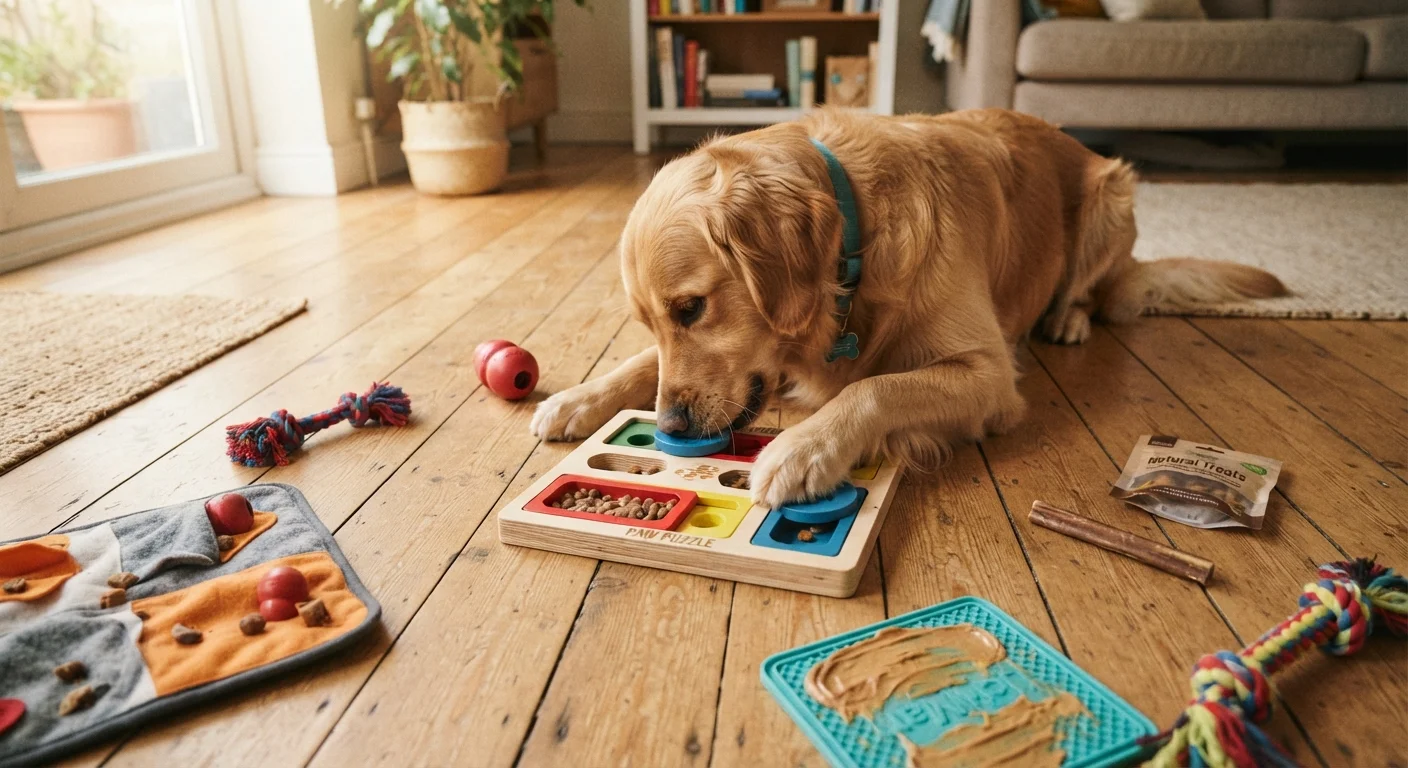
- Foraging and food-based enrichment: Puzzle feeders, scatter feeding, lick mats - explored further in our guide to turning mealtime into a mental workout
- Physical and motor challenges: Agility props for dogs, climbing structures for cats, tunnels for small animals
- Social and interactive enrichment: Training sessions, cooperative games, or owner-led play
Rotating across these categories - rather than cycling within just one - ensures your pet's brain is challenged through multiple pathways. Different animals also respond to distinct approaches; enrichment tailored by species can sharpen your strategy further.
Reading Your Pet's Response and Avoiding Pitfalls
Rotation works best when it's guided by observation. Signs that an item has lost its novelty include: brief or dismissive sniffing, no vocalization or play behavior, and walking past the toy entirely. Conversely, watch for signs that a new item is too stimulating - panting, trembling, or avoidance - which may signal stress rather than excitement.
When to Slow Down a Rotation
Pets recovering from illness, surgery, or a recent move may need a more stable, predictable environment before benefiting from novelty-based rotation. During high-stress periods, familiar items can provide comfort. Reintroduce variety gradually once your pet has resettled, and always follow your veterinarian's guidance on activity restrictions during recovery.
If you find your pet consistently disengaged, it may be worth examining whether you're rotating frequently enough or whether the enrichment types you're using match your pet's natural instincts. Indoor and outdoor enrichment each open different behavioral opportunities, and combining both broadens the rotation palette significantly - our piece on indoor vs. outdoor enrichment covers this balance in detail. Also be aware that some well-intentioned enrichment habits can backfire - common enrichment pitfalls are worth reviewing so you can course-correct early.
This article is for general informational and educational purposes. For concerns about your pet's behavioral health, consult a licensed veterinarian or certified animal behaviorist.