

Key Takeaways
- Having a stocked pet first aid kit and emergency contacts ready before a crisis can reduce harm and save time.
- First aid supplies for pets differ from human kits - certain human medications are toxic to animals.
- Your veterinarian's after-hours line and the nearest emergency animal hospital should be saved in advance.
- Knowing your pet's baseline vitals helps you recognize when something is genuinely wrong.
- A pet first aid kit is a bridge to professional care, not a replacement for it.
Summary
22 items · 30-60 minutes to assemble and organize
Why Preparation Matters Before the Emergency Happens
Most pet health emergencies give little warning. A dog can ingest something toxic during an evening walk. A cat can suffer a sudden injury while you are at work. In those first critical minutes, the difference between a good outcome and a worsened one often comes down to whether you already knew what to do - and already had what you needed.
Pet first aid preparedness is a core piece of responsible ownership, sitting alongside nutrition, vaccination, and parasite prevention as a habit worth building proactively. As our guide on preventive pet care explains, the decisions you make before a problem arises carry real long-term consequences. This checklist gives you a concrete starting point.
First aid for pets is not a substitute for veterinary care. It is a bridge - a way to stabilize your animal, prevent further harm, and buy time while you get to a professional. With that framing in mind, use the checklist below to audit what you currently have and identify any gaps.
Never Administer Human Medications Without Veterinary Guidance
Many medications that are safe for people are toxic or even fatal to pets. Acetaminophen (Tylenol) is highly toxic to cats; ibuprofen and aspirin can cause serious gastrointestinal and kidney damage in both dogs and cats. Do not give any over-the-counter human medication to your pet unless explicitly directed by a licensed veterinarian who knows your animal's health history.
What to Gather: Your Pet First Aid Checklist
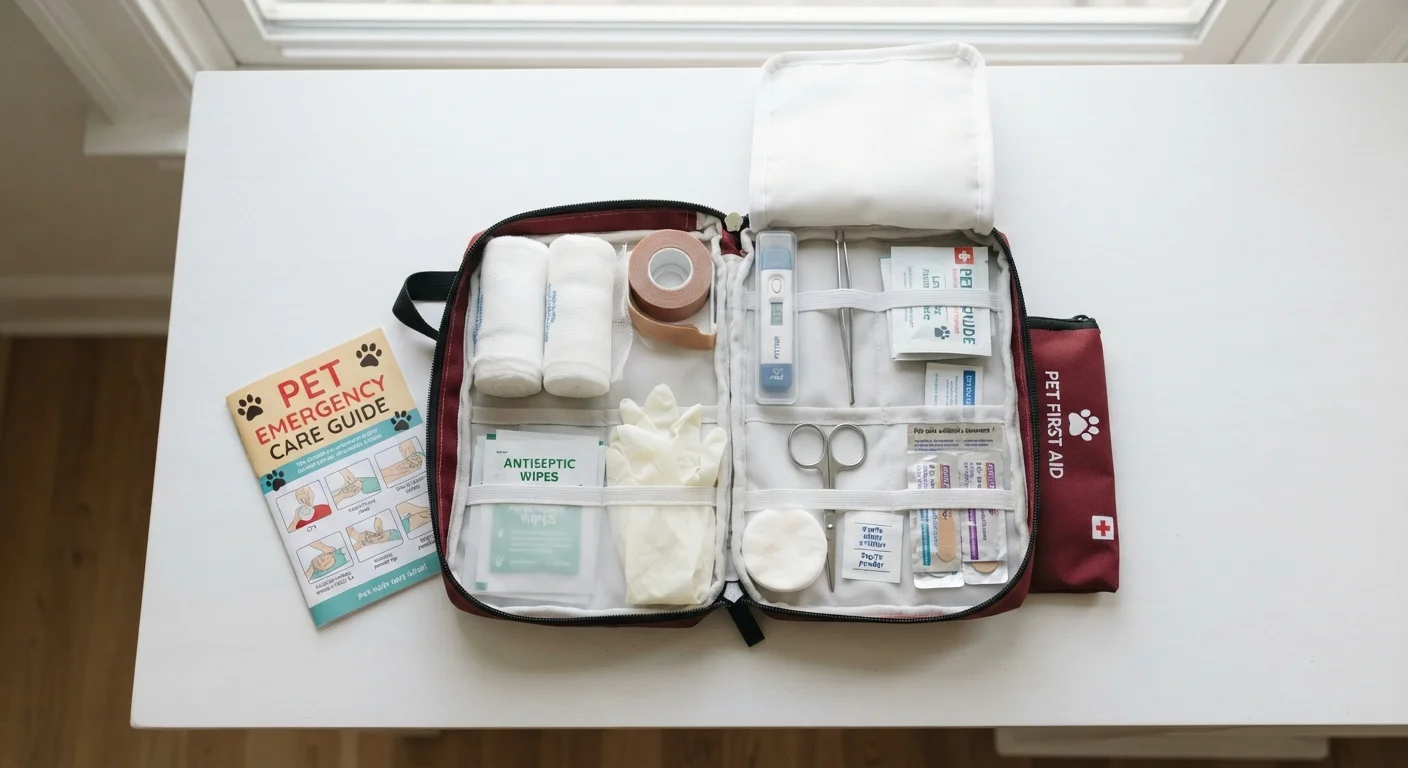
Work through the groups below in a single session, ideally assembling everything into a dedicated waterproof container or bag that is clearly labeled and stored in a consistent, accessible location. If you travel frequently with your pet, consider building a second, scaled-down kit for the car - a parallel habit to keeping an emergency kit in your vehicle.
Emergency Contact Information
Medical Records and Documentation
Wound Care Supplies
Examination and Monitoring Tools
Restraint and Transport Supplies
Reference Materials
Tools and Resources That Support Your Preparedness
The physical supplies in your kit matter, but so does your baseline knowledge. Consider supplementing your kit with these resources.
Pet First Aid Reference Guide (AVMA or Red Cross)
Provides step-by-step visual instructions for common emergencies such as choking, CPR, bleeding control, and heatstroke - available in print and as a mobile app.
Dedicated Waterproof Storage Container
Keeps all kit supplies organized, dry, and in a single location so nothing is missing when seconds count.
Pet First Aid and CPR Course
Hands-on training offered by organizations such as the American Red Cross helps owners practice skills like rescue breathing and bleeding control before an emergency.
Poison Control Consultation Service
Telephone-based toxicology guidance from veterinary specialists - keep both major US service numbers in your kit alongside awareness that consultation fees may apply.
Once your kit is assembled, tell every adult in your household where it is kept and what it contains. Preparedness only works when everyone with access to your pet knows the plan. You may also want to review your pet's vaccination schedule alongside this checklist - current immunization records are an important piece of your emergency documentation.
Check and Refresh Your Kit Every Six Months
Saline vials, gauze, and other supplies have expiration dates. Set a calendar reminder every six months - ideally aligned with a routine vet visit - to go through your kit, replace expired items, and update any contact numbers or medical records that have changed. A kit that hasn't been checked in years may let you down when you need it most.
This article provides general educational information only and is not a substitute for professional veterinary advice, diagnosis, or treatment. Always contact a licensed veterinarian or emergency animal hospital for guidance specific to your pet's condition.