

Key Takeaways
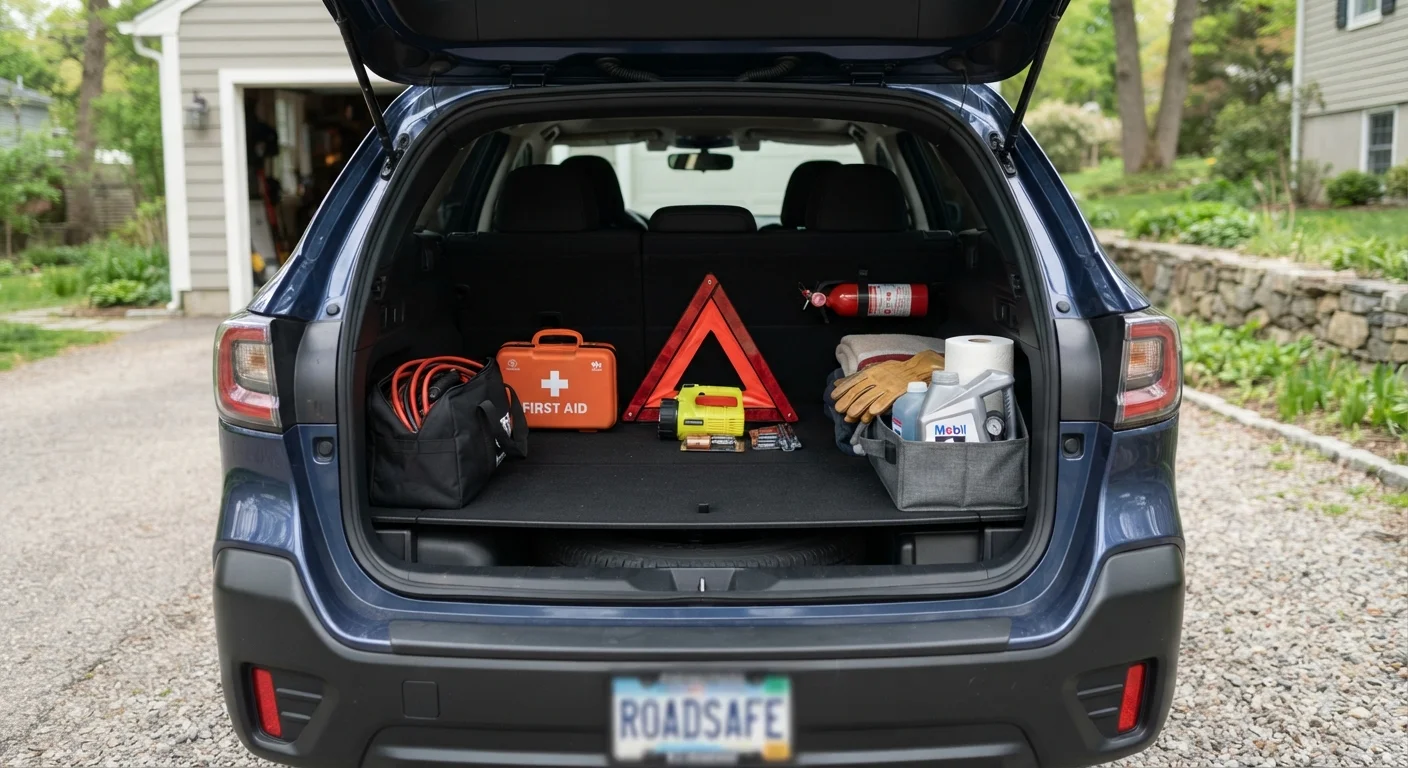
- A properly stocked trunk handles the most common roadside emergencies without outside help.
- Jumper cables, a first aid kit, and a flashlight are non-negotiable year-round essentials.
- Visibility tools like reflective triangles protect you during unexpected stops on busy roads.
- Seasonal items can rotate in and out, but a core safety kit should stay put permanently.
- Many overlooked items-like a pen or a window breaker-matter most in a genuine emergency.
Summary
22 items · 30-60 minutes to gather and load
Why Your Trunk Is Your First Line of Defense
Most drivers think about roadside preparedness only after something goes wrong. A flat tire on a dark highway, a dead battery in a parking garage, or a minor fender-bender with no pen to exchange information - these are the moments that expose what's missing. The good news is that stocking a practical trunk kit takes less than an hour and, once done, requires only periodic checks to stay current.
This isn't about carrying everything imaginable. It's about covering the failures that actually happen to everyday drivers. A dead battery, a flat tire, a minor injury, a missing document - these account for the vast majority of real roadside problems. The checklist below is organized by category so you can audit your trunk systematically rather than trying to remember items piecemeal.
For a deeper look at the often-overlooked items that prove their worth in a real pinch, see what drivers most commonly forget. And if you want to understand what each piece of emergency kit actually does, this breakdown of roadside kit components is worth a read before you shop.
Jumper Cables or Portable Jump Starter
Restarts a vehicle with a dead battery without waiting for roadside assistance.
First Aid Kit
Provides basic medical supplies to manage injuries at the scene of an accident or breakdown.
Reflective Warning Triangles or LED Flares
Alerts other drivers to your stopped vehicle, reducing the risk of a secondary collision.
Tire Pressure Gauge
Lets you accurately check tire inflation before and during trips.
Multi-Tool or Basic Toolkit
Handles minor mechanical adjustments and temporary repairs on the road.
Emergency Foil Blanket
Retains body heat during cold-weather breakdowns or while waiting for help.
Window Breaker / Seatbelt Cutter
Enables rapid escape from a locked or submerged vehicle after an accident.
Building Your Trunk Kit: The Full Checklist
Work through each category below to audit what you already have and identify gaps. Items marked must should be considered non-negotiable for year-round safety. Should items provide meaningful coverage for common situations, while nice-to-have items add comfort and convenience without being critical.
Emergency & Safety Gear
First Aid & Medical Basics
Tire & Basic Mechanical Supplies
Fluids & Maintenance Basics
Practical Everyday Extras
Don't Rely Solely on Your Phone
A dead or damaged phone in an emergency leaves you without navigation, emergency contacts, or roadside assistance numbers. Always keep a printed insurance card, registration, and emergency contacts in the vehicle. A standalone car charger helps, but it's not a substitute for paper backups.
Improperly Stored Fluids Can Be a Hazard
Motor oil and coolant containers must be sealed tightly and stored upright to prevent leaks in your trunk. Some fluids are flammable or harmful if they contact skin - keep them in a sealed bag and away from heat sources. Check containers periodically for cracks or loose caps.
Modern vehicles with sensitive electronics also require careful jump-start technique. If you're relying on jumper cables rather than a portable jump starter, review safe jump-starting practices for modern vehicles before you need them in the field.
Know When to Call a Professional
A trunk kit handles common situations, but it is not a substitute for trained roadside assistance or emergency services. If you're unsure whether it's safe to change a tire on the shoulder of a highway, stay in your vehicle with your seatbelt on, turn on hazard lights, and call for help. Never attempt repairs in unsafe conditions.
Keeping Your Kit Current Through the Year
A trunk kit isn't a one-time project. Fluids separate and degrade, batteries drain, first aid supplies expire, and documents go out of date. A practical approach is to audit the kit every time you rotate your tires - typically twice a year - or at each season change.
Some items rotate with the seasons. Ice scrapers, sand or kitty litter for traction, and extra warm layers belong in winter kits but take up valuable space in summer. Transitioning your vehicle through the seasons covers this rotation in detail. For a broader look at maintenance tasks tied to each time of year, seasonal car care by season is a practical reference. Your core safety items - jumper cables, first aid kit, reflective triangles, flashlight, tire tools, and documents - should remain in the trunk year-round without exception.
If you travel with pets, note that a vehicle emergency kit and a pet first aid kit serve different needs. Pet first aid preparedness covers what to carry specifically for animals. Finally, keeping a stocked trunk doesn't mean leaving valuables in plain sight - understanding parking risk helps you store gear sensibly without drawing attention.