

Key Takeaways
- Makeup labeled SPF rarely provides the full sun protection that a standalone sunscreen delivers.
- The FDA requires standalone sunscreens to meet rigorous testing standards not applied to cosmetics.
- Most people apply far too little foundation or powder to reach the SPF level stated on the label.
- Layering SPF makeup over a dedicated sunscreen adds a secondary benefit without replacing the primary one.
- Broad-spectrum, water-resistant standalone sunscreen remains the dermatologist-recommended baseline.
Our Verdict
Standalone sunscreen is the only reliable way to achieve the level of UV protection your skin actually needs. SPF-labeled makeup can contribute additional defense when layered on top, but it cannot substitute for a dedicated sunscreen step in your morning routine. Think of cosmetic SPF as a bonus - not a foundation for protection.
| Best for | Recommended |
|---|---|
| Complete, reliable daily UV protection | Standalone sunscreen |
| Boosting incidental protection throughout the day | SPF-labeled makeup layered over sunscreen |
| Minimal-makeup routines seeking convenience | Standalone sunscreen worn alone |
| Touch-up protection during prolonged outdoor exposure | SPF setting powder over standalone sunscreen |
Why the SPF on Your Foundation Label Is Misleading
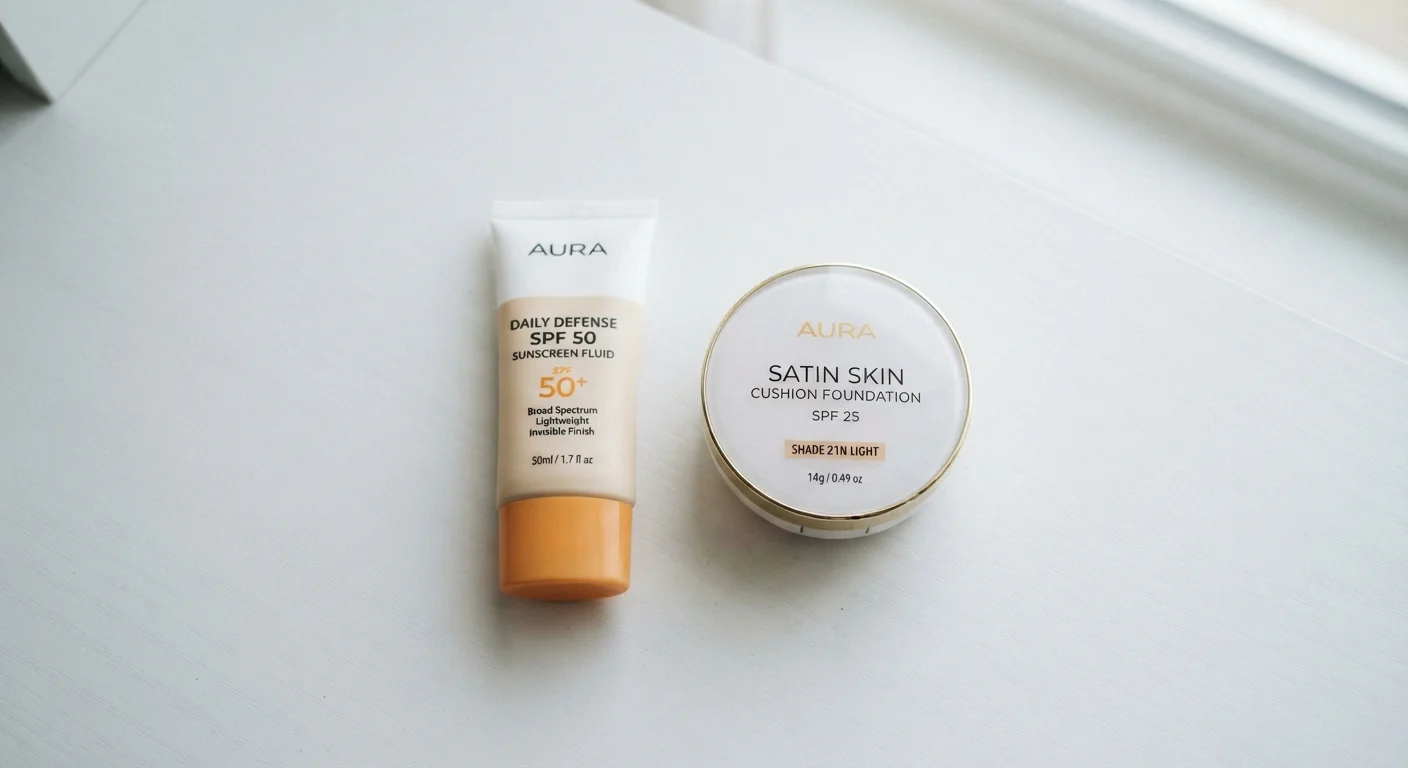
Walk down any beauty aisle and you'll find foundations, primers, and setting powders proudly advertising SPF 15, 20, or even 50. The number looks reassuring - but dermatologists and skin researchers consistently flag a critical gap between what that label implies and what your skin actually receives.
The core issue is application quantity. In controlled SPF testing, sunscreen is applied at 2 milligrams per square centimeter of skin - a standard set by the FDA and used internationally. Achieving that density on your face requires roughly a quarter-teaspoon of sunscreen. Studies examining real-world makeup habits suggest people typically apply far less than that amount in foundation or powder, often reaching only 20-50% of the tested dose. At half the tested quantity, the effective SPF drops dramatically - SPF 30 can behave closer to SPF 5 in practice.
Cosmetic products are also regulated differently from sunscreens. In the U.S., standalone sunscreens classified as over-the-counter drugs must meet FDA monograph requirements covering stability, broad-spectrum coverage, and water resistance. A foundation with SPF falls under cosmetics regulation, which imposes no equivalent protective-performance standard. That distinction matters enormously for what you can count on. For a deeper look at how product labels are structured and what terms carry weight, see how to read a skincare label.
How Standalone Sunscreen Actually Works
A dedicated sunscreen - whether chemical (organic UV filters) or mineral (zinc oxide, titanium dioxide) - is formulated specifically to form a continuous, even layer across the skin's surface. That uniformity is what makes the SPF number meaningful. The product is tested as its primary function, not as a secondary ingredient in a tinted formula.
| SPF in Makeup | Standalone Sunscreen | |
|---|---|---|
| Regulatory standard | Cosmetic regulation (no performance mandate) | FDA OTC drug monograph (tested standards) |
| Broad-spectrum testing required | Not required | Required for broad-spectrum label |
| Typical real-world application amount | Well below tested dose | Can be applied at tested dose |
| Water resistance claim | Not applicable | Must be substantiated by testing |
| Primary function | Coverage, finish, color | UV protection |
| Best role in routine | Secondary, supplemental SPF layer | Primary daily sun protection |
Broad-spectrum labeling on a standalone sunscreen means it has been tested to protect against both UVA rays (linked to premature aging and deeper skin damage) and UVB rays (the primary cause of sunburn). Water resistance claims must also be substantiated through standardized testing - 40 or 80 minutes of water exposure - before a brand can print that on the label.
Daily SPF application is consistently ranked by dermatologists as the single highest-impact skincare habit for long-term skin health. Understanding why that recommendation holds requires understanding that reliable protection depends on consistent, adequate coverage - something only a dedicated product is designed to deliver.
~25%
Actual SPF protection at half tested dose
Research published in dermatology literature indicates SPF protection drops sharply when application falls below the 2 mg/cm² testing standard - half the dose can yield roughly one-quarter of the labeled SPF.
2 mg/cm²
FDA-standard sunscreen application density
This is the quantity used in official SPF testing, equivalent to about a quarter-teaspoon for the face and neck - far more than most people apply in foundation.
The Smart Way to Layer SPF Makeup and Sunscreen
The good news: SPF-labeled makeup and standalone sunscreen are not competitors. They work well together. The recommended approach is to apply a broad-spectrum sunscreen as the last step of your skincare routine and the first step before makeup. From there, any SPF in your foundation, tinted moisturizer, or powder adds an incremental layer - a buffer that can help maintain coverage, especially if you reapply makeup midday.
For guidance on sequencing these steps effectively, the order of your skincare and makeup routine matters more than most people realize. Applying sunscreen after a heavy moisturizer, for instance, can dilute coverage.
Reapplying SPF Over Makeup
Reapplying sunscreen every two hours during prolonged sun exposure is the standard recommendation - but spraying liquid sunscreen over a full face of makeup disrupts coverage. SPF-rated setting powders offer a practical workaround for midday touch-ups, allowing you to dust on an additional layer without disturbing your base. This is where cosmetic SPF genuinely earns its place in a protection strategy.
If you wear a tinted moisturizer instead of full foundation, the same principle applies: even a tinted moisturizer with SPF 30 should sit on top of - not replace - your standalone sunscreen step. Think of every SPF-labeled cosmetic as supplementary armor, not the primary shield.
This article is for general informational and educational purposes only. For personalized skincare or dermatological advice, consult a qualified healthcare professional.