

| Number of core silhouette shapes | Approximately 6 (A-line, shift, column, fit-and-flare, wrap, boxy) (Fashion design education consensus) |
| Bias cut popularized by | Designer Madeleine Vionnet in the 1920s (Fashion history records) |
| Haute couture legal protection | Legally protected term in France, governed by the Fédération de la Haute Couture et de la Mode (Fédération de la Haute Couture et de la Mode) |
| Capsule wardrobe concept | Credited to London boutique owner Susie Faux in the 1970s (Fashion history records) |
| Typical ponte fabric composition | Rayon, nylon, and spandex blend (Textile industry standard) |
| Prêt-à-Porter vs. Haute Couture | Ready-to-wear is mass-produced in standard sizes; haute couture is custom-made in limited quantities (Industry standard distinction) |
Why Fashion Vocabulary Matters
Walking into a store or scrolling through a retailer's website, you'll encounter a steady stream of terms-ponte crepe, bias cut, colorway-that can feel more like a foreign language than practical guidance. Understanding this vocabulary isn't about being a fashion insider; it's about shopping smarter. When you can decode what a product description is actually telling you, you make fewer regrettable purchases and build a wardrobe with real staying power.
This reference guide cuts through the jargon with plain-language definitions for the terms you'll encounter most often. Pair it with our guide to fabric labels to feel fully prepared before your next shopping trip.
| Number of core silhouette shapes | Approximately 6 (A-line, shift, column, fit-and-flare, wrap, boxy) (Fashion design education consensus) |
| Bias cut popularized by | Designer Madeleine Vionnet in the 1920s (Fashion history records) |
| Haute couture legal protection | Legally protected term in France, governed by the Fédération de la Haute Couture et de la Mode (Fédération de la Haute Couture et de la Mode) |
| Capsule wardrobe concept | Credited to London boutique owner Susie Faux in the 1970s (Fashion history records) |
| Typical ponte fabric composition | Rayon, nylon, and spandex blend (Textile industry standard) |
| Prêt-à-Porter vs. Haute Couture | Ready-to-wear is mass-produced in standard sizes; haute couture is custom-made in limited quantities (Industry standard distinction) |
Core Fashion Terms Decoded
The glossary below covers the most frequently used terms across product descriptions, fashion editorial, and style guides. Each definition focuses on practical meaning-what the term tells you about fit, construction, or material-so you can apply it directly when evaluating a purchase.
Silhouette
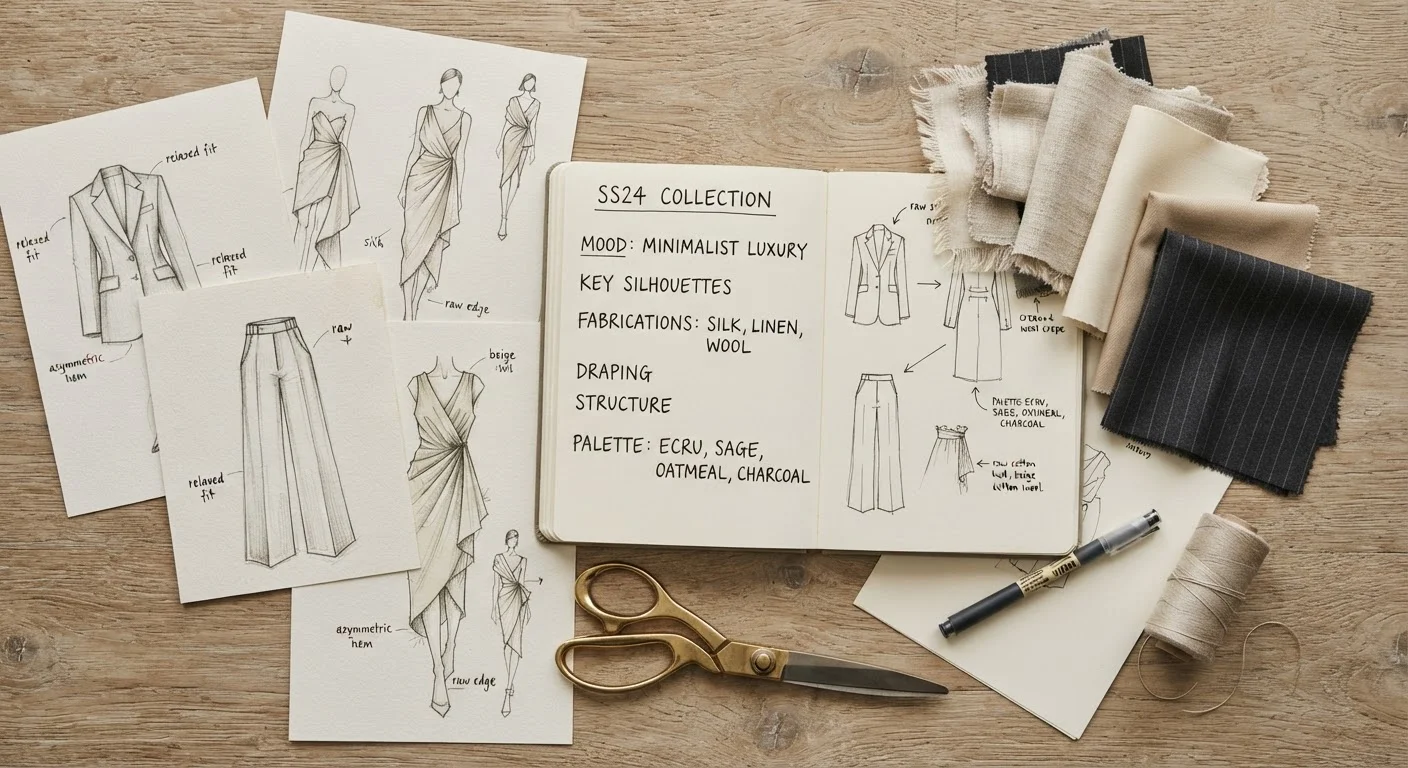
The overall outline or shape a garment creates when worn on the body. Common silhouettes include A-line, shift, hourglass, and boxy. Understanding silhouette helps you identify which cuts suit your proportions.
Drape
The way a fabric falls and moves against the body. A fabric with good drape flows gracefully; stiffer fabrics hold their shape. Drape strongly influences how elegant or structured a finished garment looks.
Colorway
A specific combination of colors applied to a single design, pattern, or print. Retailers often offer the same style in multiple colorways so shoppers can choose their preferred palette without changing the cut.
Ponte
A dense, double-knit fabric typically made from a blend of rayon, nylon, and spandex. Ponte holds its shape well, resists wrinkling, and has a modest stretch, making it a common choice for structured dresses and trousers.
Bias Cut
A cutting technique where fabric is cut diagonally across the grain at a 45-degree angle. Bias-cut garments cling and stretch with the body, creating a fluid, figure-skimming effect often seen in evening wear.
Capsule Wardrobe
A curated, minimal collection of versatile, timeless clothing pieces that mix and match easily. The goal is intentional dressing that reduces clutter and shopping decision fatigue over time.
Raw Edge
An unfinished fabric edge left intentionally without hemming or binding. Raw edges are a deliberate design choice in contemporary fashion, lending a casual or deconstructed aesthetic to a piece.
Prêt-à-Porter
French for 'ready-to-wear,' referring to clothing produced in standardized sizes and sold directly to consumers without custom tailoring. It contrasts with haute couture, which is made-to-measure for individual clients.
Topstitching
Visible stitching sewn on the outside of a garment, typically along seams or edges. It serves both a functional purpose-reinforcing seams-and a decorative one, adding definition and structure to a design.
Nap
The raised, fuzzy surface texture of certain fabrics such as velvet, corduroy, or flannel. Nap runs in one direction, which affects how light reflects off the fabric and how pieces should be matched when sewn or styled.
Greige
A neutral color sitting between gray and beige, widely used as a versatile base tone in contemporary fashion and interiors. It pairs easily with bolder accents and is a staple of minimalist styling.
Toile
A prototype garment made in inexpensive fabric-often muslin-used by designers to test a pattern's fit before cutting into final materials. The term also refers to a classic French scenic print often seen on home textiles.
Fashion Terms Can Vary by Region
Some fashion vocabulary differs between American and British English. What Americans call 'pants,' for instance, British shoppers typically call 'trousers,' while 'pants' in the UK refers to underwear. When shopping internationally or reading imported style guides, watch for these regional differences to avoid misreading a product description.
For a broader look at how these concepts connect to industry timing-like when new silhouettes typically arrive at retail-see our explainer on the seasonal fashion cycle. And if you want to decode the pricing language that often accompanies new collections, the Vocabulary of Value glossary is a useful companion resource.