
Over-Ear, On-Ear, or In-Ear: How Headphone Form Factor Changes Your Experience

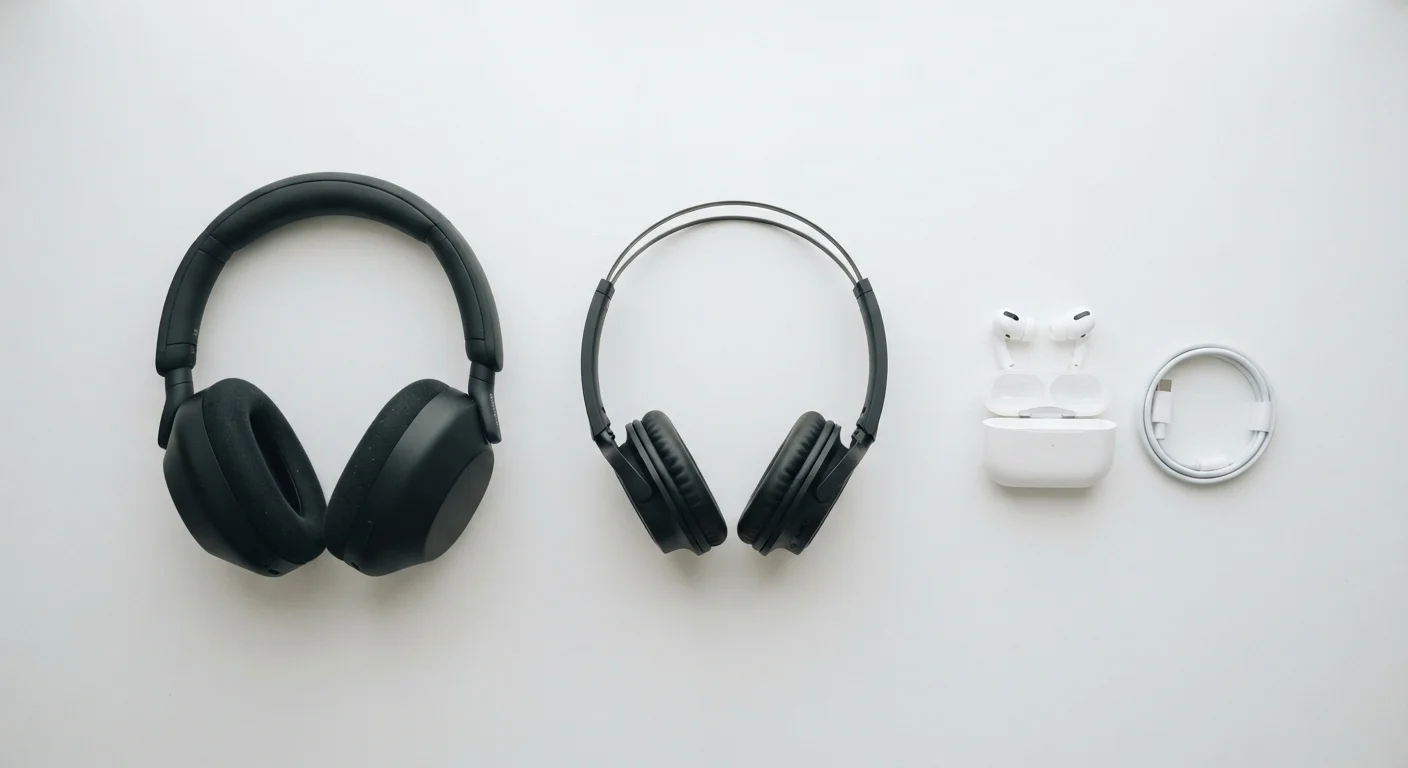
Key Takeaways
- Over-ear headphones typically deliver the best passive noise isolation and sound quality but are the bulkiest option.
- On-ear headphones balance portability and audio performance, though extended wear can cause discomfort from ear pressure.
- In-ear headphones are the most compact and travel-friendly, making them ideal for commuting, workouts, and on-the-go use.
- Your listening environment and primary use case should drive your form factor choice more than any single spec.
- Active noise cancellation is available across all three categories, so connection type and form factor are separate decisions.
Our Verdict
No single headphone form factor wins outright - each is engineered around a different set of priorities. Over-ear designs favor long listening sessions and immersive sound; on-ear models offer a middle ground for commuters who want decent audio without the bulk; and in-ear options prioritize portability above all. Matching the form factor to your actual daily routine is the single most important factor in long-term satisfaction.
| Best for | Recommended |
|---|---|
| Home listening, studio work, or long focus sessions | Over-ear headphones |
| Daily commuters who want portability and reasonable sound quality | On-ear headphones |
| Athletes, travelers, and anyone prioritizing minimal footprint | In-ear headphones |
| Mixed-use listeners who switch between environments frequently | In-ear headphones with ANC |
Why Form Factor Is the First Decision to Make
Before you consider driver size, frequency response, or wireless codecs, the physical shape of a headphone - its form factor - sets the ceiling for everything else. It determines how the sound reaches your ears, how long you can wear them comfortably, and whether they'll fit in your bag or your pocket. For a deeper look at the technical vocabulary that shows up on spec sheets, see our plain-language audio jargon guide.
The three dominant form factors - over-ear (circumaural), on-ear (supra-aural), and in-ear (including earbuds and in-ear monitors) - each reflect a deliberate engineering trade-off. Understanding those trade-offs prevents buyer's remorse far more reliably than chasing specifications.
| Over-Ear | On-Ear | In-Ear | |
|---|---|---|---|
| Comfort for long sessions | Generally highest - no ear pressure | Moderate - pressure builds over time | Varies by fit; can fatigue canal |
| Passive noise isolation | Strong - full ear seal | Moderate - partial seal | Strong when tip fits correctly |
| Portability | Low - bulky, heavy | Medium - foldable but noticeable | High - pocket or case sized |
| Soundstage width | Wide - drivers off-ear | Moderate | Narrower - drivers in canal |
| Suitability for workouts | Poor - size and heat retention | Limited - can shift during movement | High - compact and stable with right tips |
| ANC availability | Widely available | Available, less common | Widely available in wireless models |
| Typical weight range | 200-400g | 100-200g | Under 10g per earbud |
Over-Ear Headphones: Immersion and Endurance
Over-ear headphones surround the entire outer ear (the pinna) with a cushioned cup. Because the drivers sit off the ear rather than pressing against it, this design typically delivers a wider soundstage - the perceived sense of space in recorded audio - and better passive noise isolation than on-ear designs. Long listening sessions are generally more comfortable because there's no sustained pressure on cartilage.
The downsides are weight and bulk. Over-ear models are the heaviest of the three categories and rarely fold small enough for a jacket pocket. They also trap heat, which can become noticeable during warmer months. These headphones tend to shine in stationary environments: home offices, recording spaces, or long flights where you're not moving much.
Try Before You Commit to Over-Ear
Over-ear headphone comfort is highly dependent on head shape and ear size. A pair that feels padded and secure for one person can feel tight or warm for another within the same listening session. If possible, wear a candidate pair for at least 20-30 minutes before purchasing. Pay attention to clamp force and the breathability of the ear cushion material, not just the initial feel.
On-Ear Headphones: The Compromise Option
On-ear headphones rest the driver cups directly against the outer ear rather than around it. This reduces overall size and weight compared to over-ear designs, making them easier to carry and more socially acceptable in public settings - they look less imposing and fold more compactly.
The trade-off is comfort over time. The pressure required to maintain a seal (and therefore retain bass) can cause ear fatigue after an hour or two of continuous wear. Passive noise isolation is also weaker, because the seal around the ear is less complete. On-ear models occupy useful middle ground for commuters who want something more packable than over-ear headphones but more substantial than earbuds. If the wired-versus-wireless decision is still on your mind, our comparison of wired vs. wireless headphone trade-offs covers that dimension separately.
In-Ear Headphones: Portability Above All
In-ear headphones insert into the ear canal, placing the driver closer to the eardrum than any other form factor. This proximity can produce surprisingly strong bass response and excellent passive isolation when the ear tip creates a proper seal - which is heavily dependent on fit. Most manufacturers include multiple tip sizes for this reason.
Their main advantage is obvious: they fit in a pocket, a small pouch, or a charging case barely larger than a matchbox. They're the practical default for workouts, commuting, and travel. Extended wear can cause fatigue or discomfort for some listeners, particularly if the fit isn't dialed in. Ear tip material - silicone vs. memory foam - makes a real difference in both comfort and isolation, and is often worth experimenting with.
High Volume in In-Ear Headphones Carries Real Risk
Because in-ear drivers sit directly at the ear canal entrance, they can deliver higher effective sound pressure levels (SPL) to the eardrum than over-ear designs at equivalent volume settings. Prolonged exposure to high SPL is associated with noise-induced hearing loss. Listening at moderate volumes and taking breaks are broadly recommended practices, regardless of form factor - but the proximity of in-ear designs makes volume awareness especially important.
For listeners building out a full home listening setup, in-ear headphones can complement a room-filling system nicely. Our guide to planning a whole-home audio setup explains how personal headphones and room speakers can work together.
Choosing Based on Your Real Listening Life
The most useful question isn't "which form factor sounds best?" but rather "where and how do I actually listen?" Someone who wears headphones at a desk for six-hour stretches has fundamentally different needs than a runner doing 45-minute sessions three times a week.
- Stationary, long sessions: Over-ear designs reward patience - comfort and soundstage hold up over time.
- Mixed urban use: On-ear headphones are a reasonable compromise if you want one pair that travels and still sounds respectable at home.
- Active or high-mobility use: In-ear models are the practical winner; look for a secure fit and an IPX sweat-resistance rating if physical activity is a regular factor.
- Noise-sensitive environments: All three categories now offer active noise cancellation (ANC), so that feature alone shouldn't determine your form factor.
Form factor is also distinct from the laptop-vs-desktop style of platform decisions - but the same logic applies: match the tool to your workflow rather than the other way around. See how that reasoning plays out in our laptop vs. desktop comparison for a parallel framework.