

Key Takeaways
- A dog's nose contains up to 300 million scent receptors, making sniffing deeply satisfying and mentally tiring.
- Basic scent work requires only household items like cardboard boxes, muffin tins, or towels.
- Even a 10-15 minute nose work session can calm and mentally tire an energetic dog.
- Scent enrichment works for dogs of any age, size, or mobility level.
- Consistent short sessions build confidence and strengthen the dog-owner bond over time.
What you will need
Why Scent Work Is One of the Most Powerful Enrichment Tools
Dogs experience the world primarily through smell. While the human nose holds roughly 6 million scent receptors, a dog's nose contains an estimated 100 to 300 million - and the portion of their brain dedicated to analyzing odors is, proportionally, about 40 times larger than ours. Sniffing is not a passive activity; it is cognitively demanding work that triggers neurological reward pathways and produces measurable calming effects. Research in animal behavior consistently shows that giving dogs the opportunity to forage and sniff freely reduces stress indicators and improves overall welfare.
That makes nose work an unusually efficient enrichment tool. A 15-minute scent session can produce the kind of calm tiredness that an hour of physical exercise sometimes cannot - which is particularly valuable for high-energy breeds, dogs recovering from injury, or days when outdoor exercise is limited. It is also one of the most democratic activities in pet care: it costs almost nothing, works in any size home, and is accessible to dogs of every age and mobility level.
For more on how cognitive stimulation fits into your dog's overall wellness, see our article on mental stimulation as a pillar of pet wellness. And if you want to see how nose work fits alongside other activities, balancing indoor and outdoor enrichment offers a broader framework.
What you will need
Setting Up Your First Session
The appeal of home scent work is that it demands very little in the way of equipment. Your main materials are containers and treats. Cardboard boxes collected from deliveries, plastic cups from the recycling bin, or a standard muffin tin are all you need to get started. The key principle is to initially make the task straightforward enough that your dog succeeds quickly, building drive and confidence before you introduce complexity.
Cardboard boxes or plastic cups
Used as search containers the dog sniffs to locate the hidden treat or target odor.
High-value treats
Reward the dog the instant they indicate the correct container, reinforcing the sniffing behavior.
Muffin tin
An easy beginner puzzle - treats are hidden in wells and covered with tennis balls for the dog to uncover.
Small tin or tea ball with target odor
Used in intermediate nose work to introduce a specific odor (such as birch or anise) separate from food.
Snuffle mat or rolled towels
Provides a foraging-style scent challenge ideal for dogs with limited mobility.
Choose a low-distraction room for your first sessions. Turn off the television, ask other household members to stay back, and let your dog engage with the game on their own terms. Dogs new to structured nose work sometimes need a minute to understand the game is actually about sniffing - resist the temptation to guide them physically. Patience during the initial introduction pays off in faster learning.
If you are entirely new to enrichment activities in general, our guide to getting started with enrichment when you have zero experience offers a helpful foundation before you dive in.
Use Dog-Safe Scents and Foods Only
Some essential oils and human foods are toxic to dogs. Stick to dog-safe treat rewards (plain meat, kibble, or commercially prepared dog treats) and avoid introducing essential oils into scent work without first consulting your veterinarian. When in doubt, plain high-value food scents are both effective and safe.
Step-by-Step: Running a Scent Work Session at Home
Introduce the concept with a single container
Place one box or cup upside down on the floor with a high-value treat underneath. Let your dog approach and sniff freely. The moment their nose touches or hovers over the container, say "yes" or click (if you use a clicker), then lift it and let them eat the treat. Repeat five to six times so they connect sniffing the container with reward.
Add more containers and introduce a choice
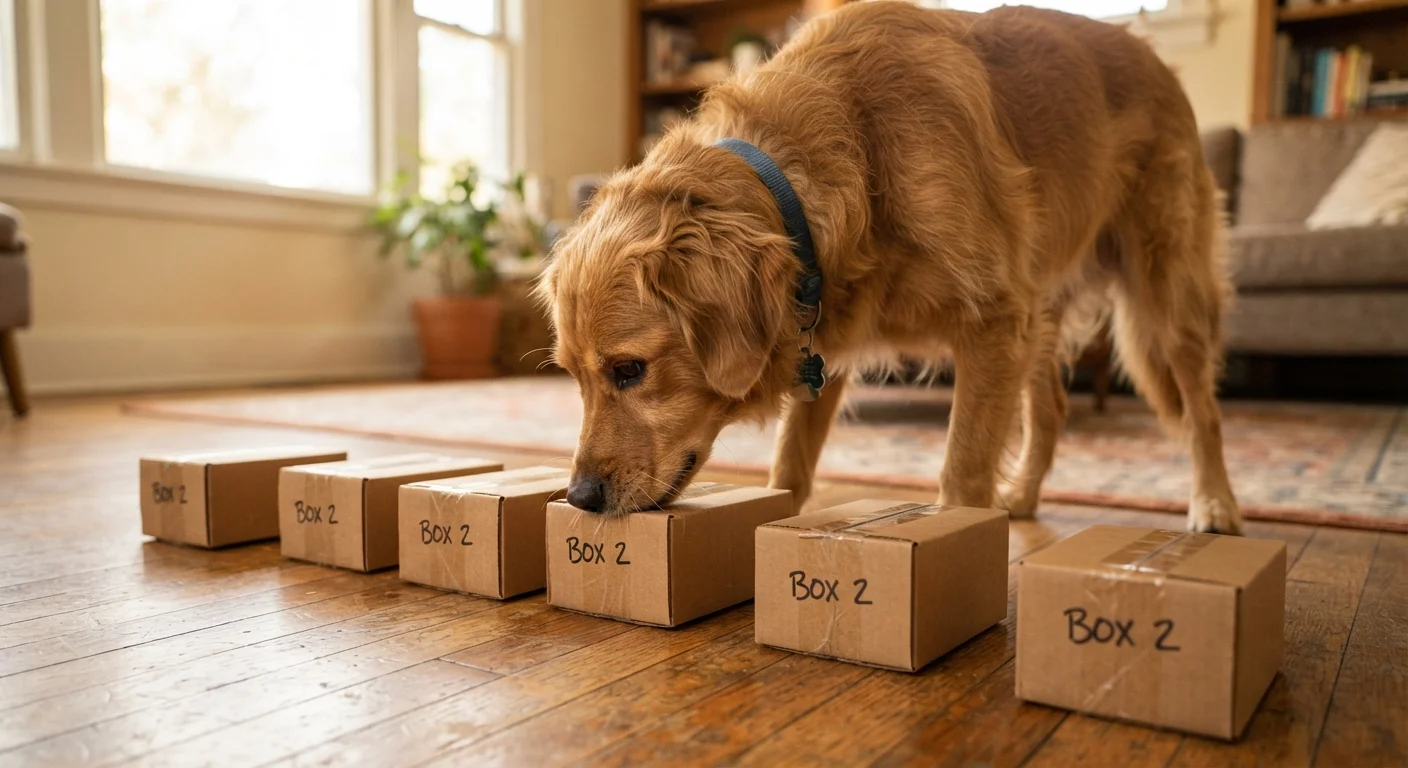
Set out three to five containers in a row. Hide a treat under only one. Send your dog with a cue like "search" or "find it" and let them work the row at their own pace. Mark and reward the moment they pause or paw at the correct container. Gradually increase the number of containers as success rates climb.
Make the hides progressively harder
Once your dog reliably finds treats among six or more containers, begin varying the difficulty: stack containers, spread them across different rooms, elevate some on low furniture, or partially bury treats inside crumpled newspaper. Each new challenge forces deeper olfactory problem-solving, which is where the real mental workout lives.
Try the muffin-tin puzzle for a low-setup variation
Place a treat in two or three wells of a standard muffin tin, then cover all wells with tennis balls. Set it on the floor and cue your dog to search. They must use scent - not sight - to identify which balls cover a reward, then flip or nudge the ball away. This variation is especially accessible for older dogs or those with joint issues because it requires no running.
Introduce a target odor for more advanced work
Formal nose work sports (such as AKC Scent Work) use specific odors - birch, anise, clove, or cypress - paired with food rewards to create a conditioned odor. At home, you can approximate this by placing a drop of food-grade anise extract on a cotton swab inside a small tin with air holes, then pairing that tin with treats exactly as you did with the original containers. Over time, your dog will alert to the odor even without a food scent present.
End every session on a successful find
Keep sessions to 10-20 minutes maximum and always plan the final hide to be an easy win. A confident, successful finish means your dog walks away energized rather than frustrated. Gradually extend session length only after your dog is consistently engaged and showing relaxed, happy body language - loose tail wag, soft eyes, willing re-engagement after each find.
Watch for Signs of Frustration or Stress
If your dog repeatedly disengages, yawns excessively, or shows stiff body language during a session, stop and give them a break. Pushing through frustration undermines confidence. Keep early sessions short - 5 to 10 minutes is plenty - and always end on a successful find.
Rotate Containers to Keep It Fresh
Once your dog has mastered a particular setup, swap in new containers - paper bags, flowerpots, or plastic cups - to keep the challenge novel. Varying the search environment (living room one day, hallway the next) also prevents the game from becoming too predictable, which preserves your dog's enthusiasm.
Once your dog is regularly finding hides with enthusiasm, consider exploring enrichment activities that also build your bond. Nose work is naturally collaborative - your job as the handler is to read your dog's body language, manage the search area, and deliver rewards with good timing. That attentiveness on your part is itself a form of connection that dogs respond to positively.
For a broader look at how scent work compares to enrichment strategies suited to other animals in your household, see enrichment by species.
This article is for general informational and educational purposes only. Always consult a qualified veterinarian regarding your individual dog's health, dietary needs, or behavioral concerns before introducing new activities or food items.