
Shrinkflation, Skimpflation, and the Subtle Ways Products Change Without Notice

Key Takeaways
- Shrinkflation reduces product quantity while the price holds steady or increases.
- Skimpflation lowers ingredient or material quality rather than package size.
- Both tactics are most common when production costs rise and companies want to protect margins.
- Unit pricing on store shelf labels is one of the clearest tools for spotting shrinkflation.
- Changes to ingredient lists or formulations are the main signal for skimpflation.
- Neither practice is illegal, but both reduce the real value shoppers receive.
Shrinkflation & Skimpflation
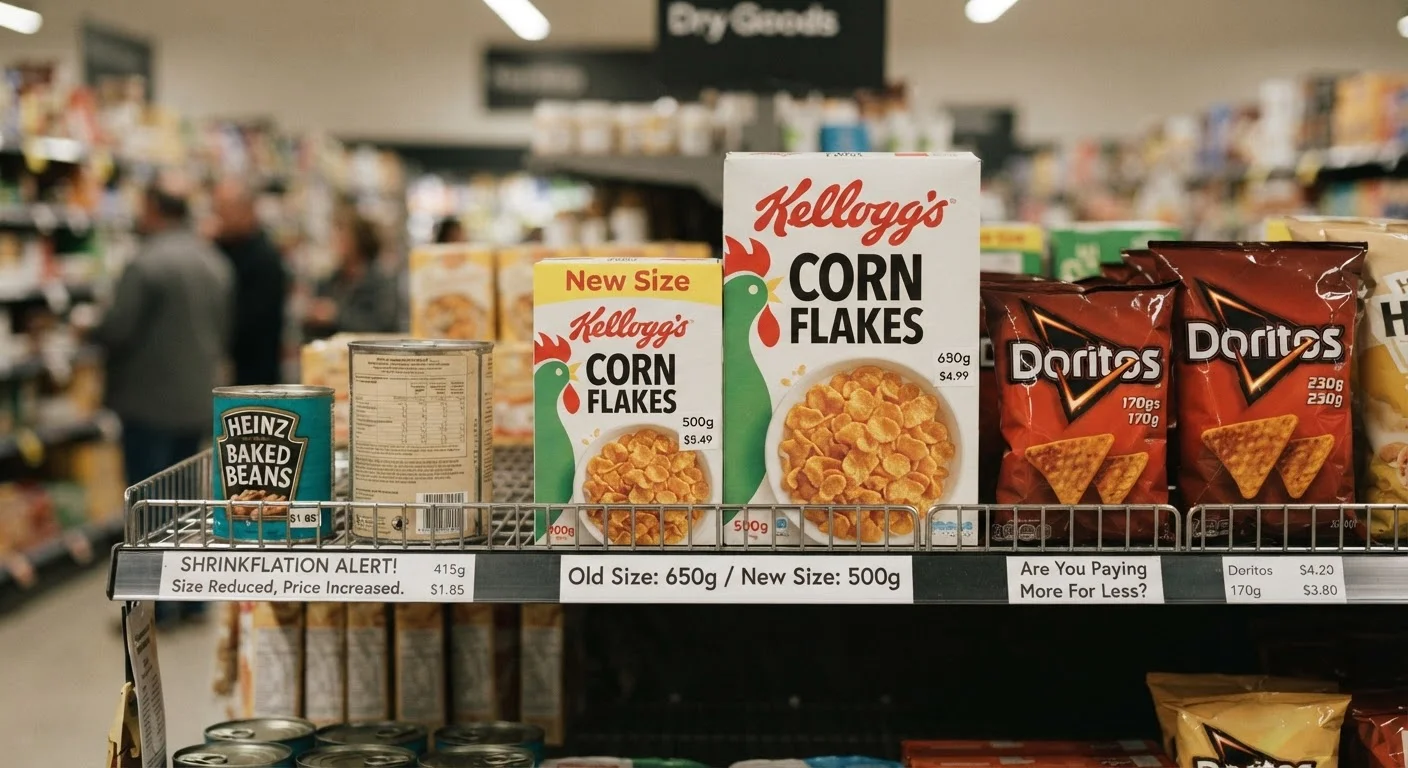
Shrinkflation is when a product's package size or quantity decreases while the price stays the same or even rises. Skimpflation is a related practice where a manufacturer quietly reduces the quality of ingredients or materials used, rather than changing the package size. Both are ways companies manage rising production costs without making a visible price change that shoppers would immediately notice.
Economists classify both as forms of "hidden inflation" - they reduce the real value consumers receive per dollar spent without appearing in headline consumer price index figures.
What's Actually Happening to Your Products
You grab your usual bag of chips, your favorite laundry detergent, or a pack of paper towels. The price looks right. The packaging looks familiar. But something feels off - you're running out faster than you used to. Chances are, you've encountered either shrinkflation or skimpflation.
These are not rare edge cases. When production costs - raw materials, labor, transportation - rise significantly, companies face a choice: raise prices visibly and risk losing customers, or quietly adjust what's inside the package. Most choose the latter. The result is a real reduction in value that rarely gets announced.
Both practices are part of a broader category of consumer pitfalls that can inflate what you effectively pay for everyday goods. Understanding the mechanics of each is the first step to shopping around them.
~3,800
Products tracked for shrinkflation changes
The Consumer Price Index program at the U.S. Bureau of Labor Statistics monitors product size changes as part of its quality adjustment methodology for measuring inflation.
9 of 10
Shoppers unaware of recent size reductions
Surveys conducted by consumer advocacy researchers consistently find that the large majority of shoppers do not notice package size reductions at the time of purchase.
Food & HPC
Categories most frequently affected
Packaged foods and household and personal care (HPC) products represent the categories where shrinkflation is most systematically documented by market analysts.
Shrinkflation: Smaller Package, Same Price
Shrinkflation is the simpler of the two concepts. A product that once weighed 16 ounces gets quietly reformatted to 13.5 ounces. The price holds. The packaging design stays nearly identical. The only reliable signal is the net weight printed on the label - and most shoppers don't check that number on every visit.
Common shrinkflation tactics include reducing the count in a multi-unit pack, shortening a roll or sheet product, or adding more air space inside a package (technically called "slack fill," which packaging regulations limit but don't eliminate). These changes are disclosed in the fine print of the label because they legally must be - they're just not highlighted.
The most practical counter-tool is the unit price, typically shown on the store shelf label in small print. Unit price expresses cost per ounce, per count, or per some other standard measure. If that number creeps up while the shelf price stays flat, the product has gotten smaller. This connects directly to the logic behind price-per-use thinking - the sticker price tells you much less than the cost per actual unit of value.
Make Unit Price Your Default Check
Before comparing two products on a shelf, look at the unit price - not the total price. Most grocery shelf labels display cost per ounce, per sheet, or per count in smaller print beneath the main price. This single number makes both shrinkflation and cross-product value comparisons immediately transparent. It also lets you track whether a product's effective price has risen between shopping trips even when the shelf price appears unchanged.
Skimpflation: Same Size, Different Standards
Skimpflation is subtler and often harder to detect because the package dimensions don't change. Instead, a formulation shifts - a food product uses a cheaper oil or sweetener, a cleaning product reduces its concentration of active ingredient, a fabric blend swaps a higher-quality fiber for a lower-cost synthetic.
The primary evidence trail for skimpflation is the ingredient list. Ingredients are listed in descending order by weight in most regulated markets, so a key ingredient moving lower on the list is a meaningful signal. Comparing ingredient lists between an older package you've kept and a new purchase can reveal substitutions. Consumer and product-testing organizations sometimes track these changes systematically.
For non-food products, skimpflation can show up as thinner packaging, reduced thread counts, lighter-gauge materials, or simplified construction - changes that may only become apparent after extended use. This is one reason asking the right questions before buying matters: understanding material specifications before purchase, rather than after disappointment.
“Consumers tend to be far more sensitive to price increases than to quantity decreases - which is precisely why manufacturers often prefer to shrink a product rather than raise its price. The psychological response is very different even when the economic outcome is the same.”
— Edgar Dworsky, Consumer advocate and founder of Consumer World, a long-running watchdog resource on retail pricing practices
How to Protect Your Purchasing Power
Awareness is the foundation. Once you know these tactics exist, your shopping instincts recalibrate naturally. A few habits that help:
- Read unit prices, not shelf prices. Most grocery stores are required to display unit pricing. Make it a reflex to glance at that figure, especially for products you buy regularly.
- Check net weight and count on every purchase. This takes seconds and is the most direct shrinkflation check available.
- Compare ingredient lists over time. If a product you've used for years seems to be performing differently, a changed formulation may be why.
- Watch for packaging redesigns. Companies often introduce size reductions at the same time as a cosmetic packaging refresh - the new look distracts from the smaller contents.
It's also worth recognizing that these aren't isolated retail quirks - they connect to broader inflationary pressures. Inflation erodes purchasing power in multiple ways simultaneously, and shrinkflation is one of the more tangible, day-to-day expressions of that dynamic. Similarly, pairing this awareness with knowledge of hidden costs in pricing gives you a more complete picture of what a product truly costs.
Labeling Requirements Vary by Product Type
In the United States, packaged food products are regulated by the FDA and USDA, which require accurate net quantity disclosure on labels. Non-food consumer products fall under FTC and state-level regulations, which may have different requirements. This means the transparency shoppers have for food products doesn't always extend equally to household goods, apparel, or personal care items. When in doubt, checking the stated specifications directly - weight, dimensions, material composition - is the most reliable approach.