

Key Takeaways
- Inflation reduces what your money can buy, even if the account balance doesn't change.
- A savings account earning less than the inflation rate loses real value over time.
- Inflation compounds: small annual losses in purchasing power add up significantly over decades.
- Understanding inflation is a foundational step in building a long-term financial plan.
- Keeping all savings in cash carries an inflation risk that is easy to overlook.
Inflation
Inflation is the gradual rise in the prices of goods and services over time. As prices climb, each dollar you hold buys a little less than it did before. This means the purchasing power of your savings declines even when the dollar amount in your account stays the same.
Economists typically measure inflation using indices such as the Consumer Price Index (CPI), which tracks the average price change of a standardized basket of consumer goods and services.
The Silent Shrinkage of Purchasing Power
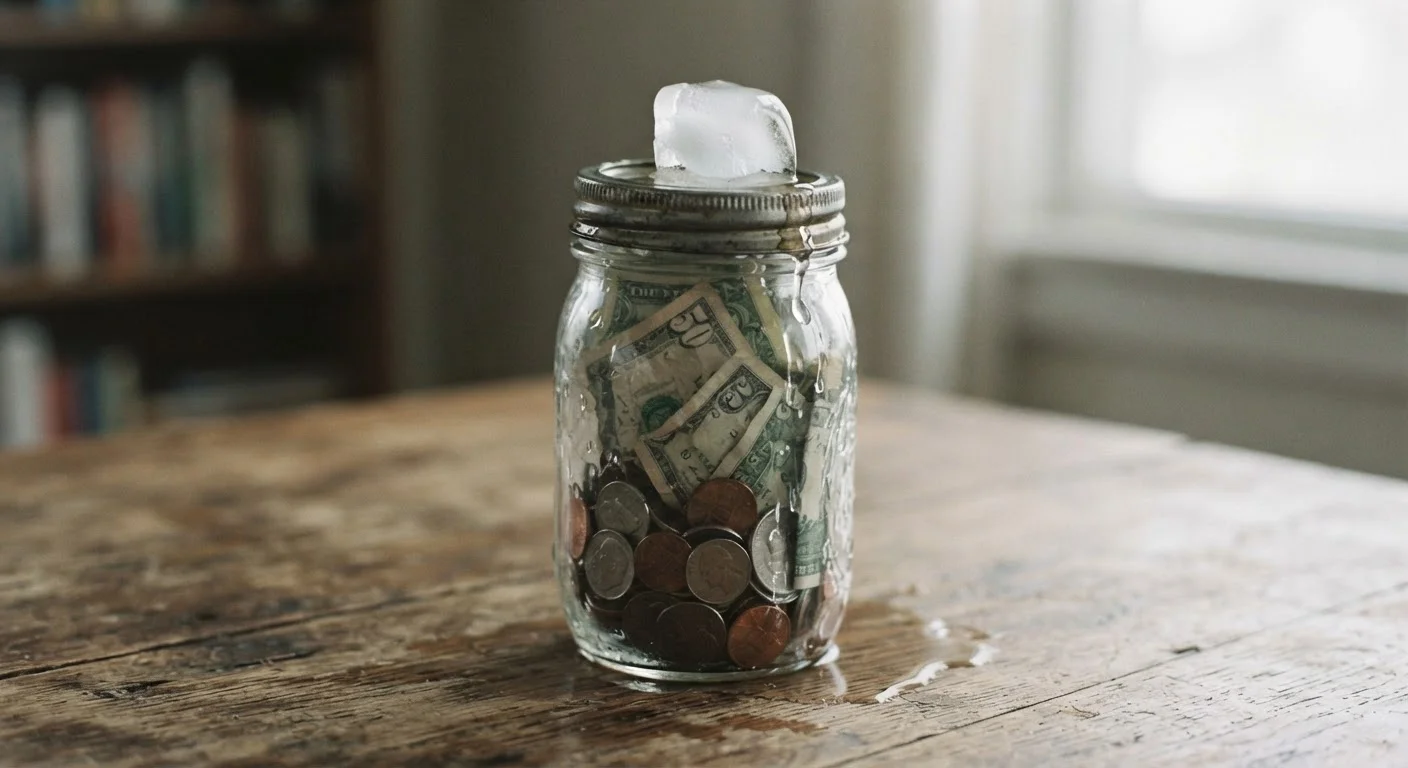
Imagine setting aside $5,000 in a drawer and returning to it five years later. The bills look identical - same amount, same denomination. Yet at a 3% annual inflation rate, those dollars would only buy what roughly $4,300 could purchase five years earlier. No one took the money. Nothing went wrong. Inflation simply did its quiet work.
This is the core challenge inflation poses for savers: it does not announce itself. It accumulates gradually, percentage point by percentage point, year by year. By the time most people notice its impact, it has already compounded. Understanding how this process works is one of the most practical things you can do early in your financial journey.
~26%
Purchasing power lost at 3% inflation over 10 years
At a sustained 3% annual inflation rate, $10,000 in cash would only purchase what roughly $7,400 could buy a decade earlier.
3%
U.S. long-run average annual inflation (approximate)
The U.S. Consumer Price Index has historically averaged close to 3% annually over multi-decade periods, though rates vary widely year to year.
~50%
Purchasing power lost at 3% inflation over 25 years
Compounded over a full generation, moderate inflation can erode the real value of idle cash savings by roughly half, illustrating the long-term cost of holding uninvested cash.
How Inflation and Interest Rates Interact
Keeping money in a savings account does offer some protection - but only if the interest rate your account earns outpaces inflation. When it does not, you are earning what economists call a negative real return: your balance grows in number, but shrinks in purchasing power.
For example, if your high-yield savings account pays 1.5% annually while inflation runs at 3.5%, your real return is approximately negative 2% per year. After a decade, the gap between what you saved and what that money can actually buy becomes meaningful. This concept - the real interest rate - is a more honest measure of whether your savings are working for you.
“Inflation is as violent as a mugger, as frightening as an armed robber, and as deadly as a hit man.”
— Ronald Reagan, 40th President of the United States, in a 1978 speech on economic policy
This dynamic is also why financial educators often distinguish between saving and investing. See our guide to saving vs. investing for a deeper look at how each tool fits a long-term plan.
Why This Matters More Over Time
Inflation's most significant impact on savings is not what it does in a single year - it is what it does over many years. A 3% annual erosion might feel trivial in the short term, but compounded over 20 or 30 years, it can cut purchasing power nearly in half. This is a mirror image of how compound interest builds wealth: the same compounding math that grows a well-invested account can work against cash sitting idle.
Inflation also affects everyday spending in ways that are easy to miss. Shrinking product sizes and declining quality - sometimes called shrinkflation - are part of how inflation shows up in consumer markets without a price tag visibly changing. Similarly, certain large purchases like vehicles are shaped both by inflation and by depreciation, creating a double squeeze on long-term value.
Check Your Real Return Regularly
At least once a year, compare the interest rate on your savings accounts to the current inflation rate. If your rate falls significantly below inflation, your purchasing power is declining. This quick check takes just a few minutes and can clarify whether your savings strategy needs revisiting.
What This Means for Your Financial Planning
Recognizing inflation as a real, ongoing cost of holding cash is a shift in perspective that matters. It does not mean cash savings are unimportant - emergency funds, short-term goals, and liquidity all have genuine value. But treating a savings account as a long-term wealth-building strategy, without accounting for inflation, is one of the early saving mistakes that can quietly set back long-term goals.
As a starting point, it helps to ask: Is the interest my savings earns keeping pace with inflation? That single question can reframe how you think about where to keep money and for how long. For personalized guidance on managing savings against inflation in your specific situation, consider consulting a licensed financial adviser or certified financial planner.
This article is for general informational and educational purposes only and does not constitute personalized financial, investment, or tax advice. Please consult a qualified financial professional before making decisions about your savings or investments.