

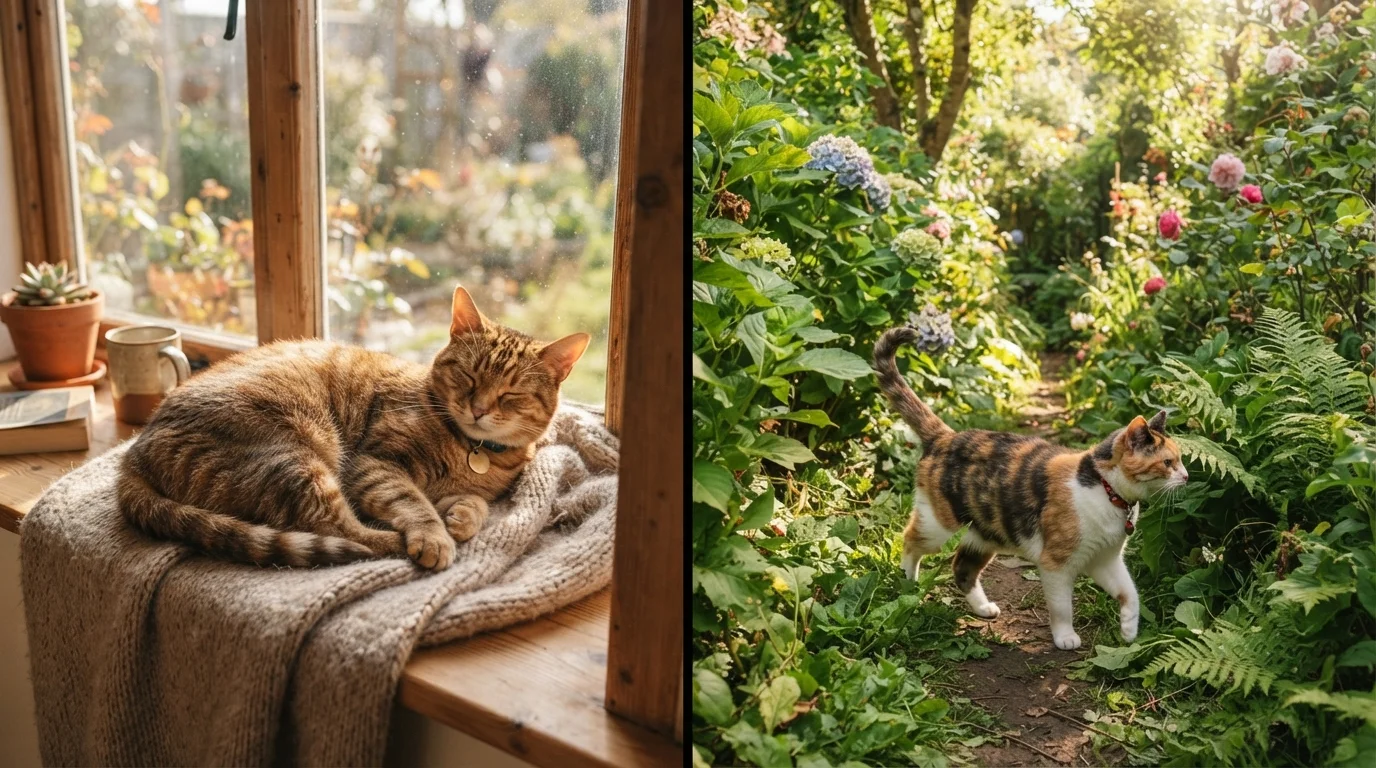
Key Takeaways
- Indoor cats generally live significantly longer than outdoor cats, largely due to reduced exposure to hazards.
- Outdoor cats face higher risks from infectious disease, parasites, trauma, and predation.
- Indoor cats are more prone to obesity, stress-related conditions, and behavioral issues if under-stimulated.
- Vaccination, parasite prevention, and enrichment are non-negotiable regardless of lifestyle.
- Supervised outdoor access - such as catios or leash walking - can offer a middle-ground option.
- No single lifestyle fits every cat; individual temperament, health history, and environment all matter.
Option A
Indoor Cats
The protected, enrichment-dependent lifestyle.
Best for: Owners who prioritize longevity and minimizing exposure to infectious disease, predators, and traffic.
Option B
Outdoor Cats
The freedom-rich, higher-risk lifestyle.
Best for: Cats with strong prey drive or high activity needs, in environments where hazards can be meaningfully managed.
If your cat has never been outdoors and shows no signs of restlessness
Indoor Cats
Indoor-only life poses the fewest physical hazards. With proper enrichment, a settled indoor cat can thrive without outdoor access.
If your cat has a strong prey drive, high activity level, or significant outdoor history
Outdoor Cats
Forcing a highly active or previously outdoor cat to stay inside without adequate stimulation can cause stress and behavioral problems. Managed outdoor access may better serve their welfare.
If you want to balance safety with environmental stimulation
Indoor Cats
A catio, harness walks, or enclosed garden space offers meaningful enrichment while keeping risk low - making indoor life genuinely fulfilling.
If your cat is immunocompromised or has a chronic health condition
Indoor Cats
Reduced pathogen exposure is especially important for cats with compromised immune systems; your veterinarian should guide the final decision.
Lifespan and Physical Safety: What the Data Suggests
One of the most frequently cited differences between indoor and outdoor cats is lifespan. Estimates from veterinary and animal welfare sources consistently suggest that indoor cats live considerably longer on average - commonly cited ranges place indoor cat lifespans between 12 and 18 years, while outdoor or free-roaming cats may average just 2 to 5 years. These figures vary by study methodology and population, but the directional consensus is clear: outdoor life carries substantially higher mortality risk.
The primary culprits for shortened outdoor lifespans include vehicle collisions, attacks from dogs or wildlife, accidental ingestion of toxins, and exposure to infectious diseases. Trauma-related injuries represent a significant portion of emergency veterinary visits for outdoor cats. Understanding these risks isn't meant to alarm - it's meant to inform decisions that owners make with full awareness of the tradeoffs.
2-5 yrs
Estimated average lifespan for outdoor cats
Veterinary and animal welfare sources consistently report substantially shorter lifespans for free-roaming cats compared to indoor-only cats.
~60%
US cats estimated to be overweight or obese
According to the Association for Pet Obesity Prevention, a majority of domestic cats in the US are overweight, a condition closely linked to low physical activity.
Up to 3×
Higher FIV risk in outdoor vs. indoor cats
Studies on feline immunodeficiency virus prevalence consistently find outdoor and roaming cats at significantly greater risk due to contact with other cats.
For more on how preventive care decisions connect to long-term health outcomes, see the long-term logic behind preventive veterinary care.
Disease Exposure and Parasite Risk
Outdoor cats face meaningful exposure to infectious diseases that are largely avoidable indoors. Feline leukemia virus (FeLV) and feline immunodeficiency virus (FIV) spread primarily through direct cat-to-cat contact - biting during territorial fights is a common transmission route. Feline upper respiratory infections circulate freely among outdoor cat populations. Rabies, while preventable through vaccination, remains a legal and public health consideration in most US states for outdoor cats.
Parasite burden is another significant differentiator. Outdoor cats are regularly exposed to fleas, ticks, ear mites, and intestinal parasites including roundworms and hookworms. Some of these parasites can be transmitted to humans, making parasite prevention both a pet health and household health concern. Indoor cats can still acquire parasites - particularly fleas carried in by humans or other pets - but overall exposure frequency is far lower.
| Criterion | Indoor Cats | Outdoor Cats |
|---|---|---|
| Average lifespan | 12-18 years (estimated) | 2-5 years (estimated) |
| Infectious disease risk | Low (if vaccinated) | High (FeLV, FIV, URI, rabies) |
| Parasite exposure | Low to moderate | High (fleas, ticks, worms) |
| Trauma / accident risk | Very low | High (vehicles, predators) |
| Obesity risk | Higher without enrichment | Lower due to activity |
| Behavioral stress risk | Moderate if under-stimulated | Low (more environmental variety) |
| Vaccination needs | Core vaccines required | Core + additional recommended |
| Parasite prevention | Recommended year-round | Essential year-round |
Regardless of lifestyle, current vaccination and parasite prevention protocols recommended by your veterinarian remain essential. Skipping them for indoor cats is a common and risky assumption.
The Indoor Cat's Hidden Health Challenges
Indoor life is not without its own health risks. Obesity is among the most prevalent health conditions in domestic cats in the United States, and reduced physical activity from indoor living is a key contributing factor. Obesity predisposes cats to diabetes mellitus, hepatic lipidosis, joint disease, and urinary tract problems - all conditions with significant welfare and financial implications.
Behavioral and psychological health matter too. Indoor cats who lack adequate mental stimulation can develop stress-related conditions including feline idiopathic cystitis (FIC), overgrooming, and inter-cat aggression in multi-cat households. The good news is that these risks are largely preventable through thoughtful environmental design. Indoor cats are not automatically bored if their environment is well-designed - structured play, vertical space, puzzle feeders, and social interaction can meaningfully address these gaps.
Nutrition also plays a role in indoor cat health. Caloric needs may be lower for less active cats, and dietary choices affect weight, urinary health, and longevity. See how kibble and wet food compare for cats for context on meeting indoor cats' nutritional needs.
Middle-Ground Options and Practical Considerations
The indoor-outdoor binary is increasingly giving way to managed middle-ground options. Catios - enclosed outdoor structures attached to a home - allow cats to experience fresh air, natural light, and sensory stimulation without exposure to traffic, predators, or roaming cats. Harness and leash training is another option that some cats adapt to well, particularly when introduced gradually. These approaches are worth discussing with a veterinarian who knows your individual cat's temperament and health status.
For owners navigating this decision, combining indoor and outdoor enrichment strategies can help tailor an approach to the specific cat rather than applying a blanket rule. The right answer depends on the cat's history, personality, local environment, and the owner's capacity to manage risk and provide stimulation.
Considering a Supervised Outdoor Setup?
Catios and enclosed garden runs vary widely in size, complexity, and cost. Before building or purchasing, consider your cat's individual temperament - not all cats are motivated to use outdoor enclosures, particularly those raised entirely indoors. A veterinarian or certified cat behavior consultant can help assess whether supervised outdoor access is appropriate for your specific animal.
This article is for general informational purposes only and is not a substitute for professional veterinary advice. Always consult a licensed veterinarian for guidance specific to your cat's health, history, and circumstances.