

Key Takeaways
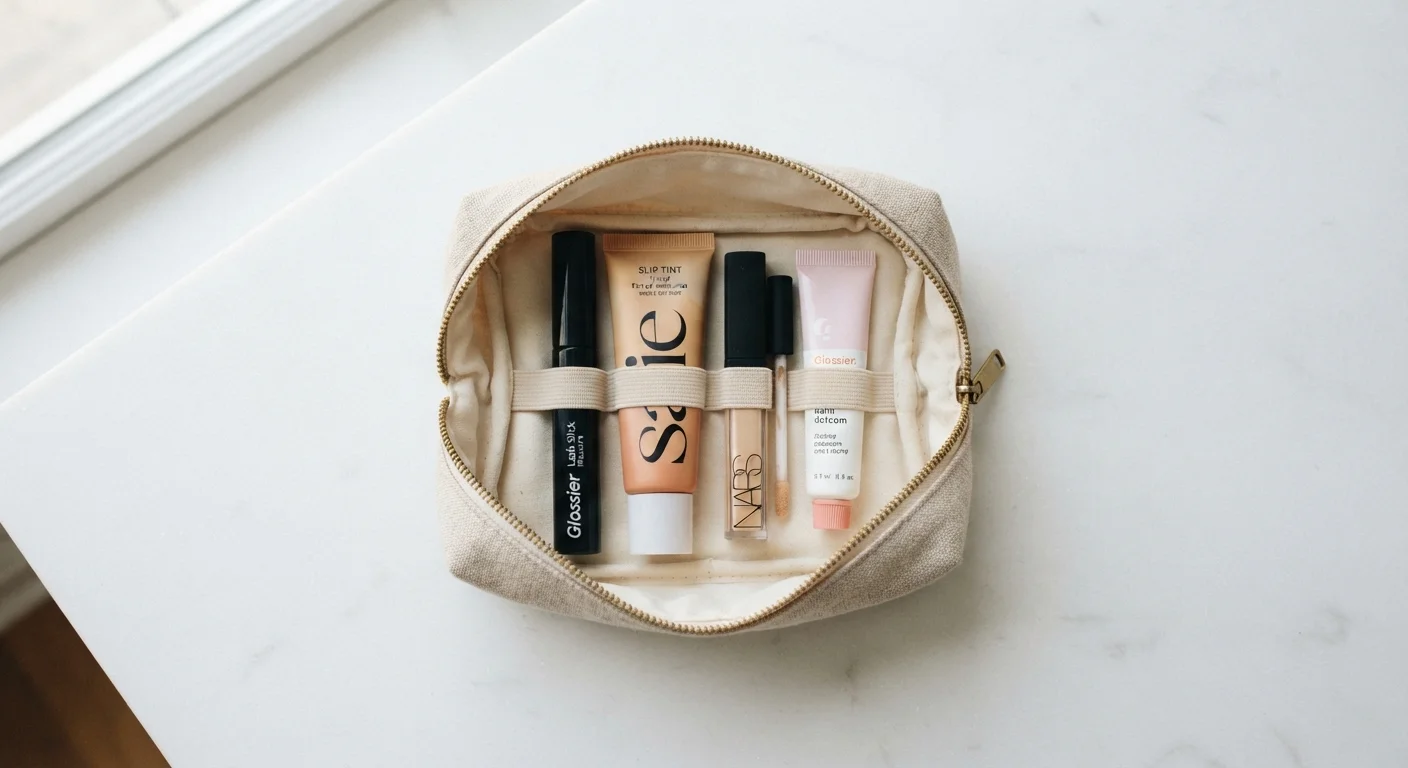
- A practical everyday bag needs fewer products than most people carry - typically five to seven items.
- Multi-use products reduce clutter without sacrificing a polished look.
- Hygiene and expiration dates matter as much as product selection.
- Some products - heavy contouring kits, glitter, full coverage foundations - are better reserved for special occasions.
- Your skin prep routine directly affects how much makeup you actually need daily.
Summary
18 items · 20-40 minutes
Why Your Makeup Bag Deserves a Regular Audit
Most makeup bags grow without a plan. A product gets added after a trend video, a sample gets tossed in after a store visit, and gradually a bag meant for daily convenience becomes a cluttered, expired jumble. The result: longer morning routines and more decision fatigue - not less.
An intentional everyday makeup bag isn't about owning fewer things for its own sake. It's about making sure everything in that bag actually gets used, actually works for you, and hasn't outlived its safe shelf life. If you're new to thinking about products this way, understanding what each core product does is a useful starting point before you audit what you're carrying.
Use the checklist below to sort your current lineup into keepers, items better saved for evenings or events, and products you should discard outright.
Everyday Essentials - Keep These In
Products to Move Out - Save for Special Occasions
Hygiene and Bag Maintenance
What to Look for in an Everyday Product
Not every product marketed as an everyday staple actually earns daily use. The most practical everyday items share a few traits: they apply quickly, work across multiple contexts, and don't require significant skill or time to blend. Tinted moisturizers with SPF, cream blushes, and tinted lip balms are classic examples - they deliver visible results without demanding precision.
Skin preparation also reduces how much makeup you need. The order of your skincare steps before makeup directly affects how products sit on your skin and how long they last - a well-moisturized, primed face often needs less coverage than one that was rushed.
Small zip pouch or compartmentalized makeup bag
Keeps everyday essentials separated from occasion products and makes items easy to locate quickly.
Disposable spoolies
Allow hygienic brow and lash grooming without spreading bacteria between uses.
Blotting papers or compact pressed powder
Control midday shine for touch-ups without adding layers of coverage.
Small antibacterial wipes
Used monthly to clean the bag interior and wipe product exteriors.
When choosing what stays in the bag, ask: Would I use this on a Tuesday morning with 10 minutes to spare? If the answer is no, it belongs elsewhere.
Heat Degrades Makeup Formulas Faster Than You Think
Leaving products in a car, a gym bag in direct sun, or near a heat vent can separate emulsions, melt waxy formulas, and accelerate bacterial growth in liquid products. Even products within their use-by date can become ineffective or irritating when stored in high heat. Keep your everyday bag in a cool, shaded spot.
Special Occasion Products: Store Them Separately
Heavy contouring palettes, glitter pigments, full-coverage foundations, theatrical eye shadow collections - these products aren't bad. They simply don't belong in an everyday bag. Keeping them mixed with your daily essentials makes both categories harder to navigate and increases the chance that delicate packaging gets damaged.
Designate a separate pouch or drawer for occasion-specific products. This separation also makes restocking easier: when your everyday concealer runs low, you'll see it immediately rather than hunting through a crowded bag.
For readers interested in streamlining further, a minimal makeup routine that still looks polished shows exactly how a handful of versatile products can handle most situations without a packed bag.
Expired Products Can Irritate or Harm Skin
Using makeup past its period-after-opening date isn't just a performance issue - it's a skin health concern. Expired products can harbor bacteria, develop altered pH levels, and cause contact dermatitis or eye infections, particularly with mascaras and eyeliners used near mucous membranes. When in doubt, throw it out. If you experience persistent irritation, redness, or breakouts, consult a dermatologist rather than switching products on your own.
Hygiene Habits That Protect Both Your Skin and Your Products
Product selection is only part of good bag management. How you store and maintain what's in the bag matters equally. Mascara wands, lip applicators, and sponges are among the most common sources of bacterial contamination in everyday makeup use. Dermatologists generally recommend replacing mascara every two to three months regardless of how much remains - the wand introduces air and bacteria into the tube with every use.
Keeping a small supply of disposable spoolies and blending sponges in the bag makes it easier to maintain clean application habits without a full brush-cleaning session every morning. If mascara smudging is a recurring issue in your routine, the problem often isn't the product alone - several application and skincare habits are frequently the real culprits.
Wipe down the interior of your bag monthly and check expiration symbols - the open-jar icon printed on packaging indicates how many months a product remains usable after opening. When in doubt, discard it.
This article is for general informational and educational purposes only. Individual skin types and concerns vary widely; consult a dermatologist or licensed esthetician for personalized skincare or product guidance.